The global economic landscape is on the cusp of a profound transformation, driven by the convergence of environmental urgency and technological advancements. The AI Circular Economy 2026 is emerging as a strategic and promising alternative investment area, where Artificial Intelligence (AI) is revolutionizing industrial recycling to make it an unprecedented lever for profitability.
AI is key to optimizing industrial recycling, making processes more efficient, profitable, and traceable. Savvy investors are positioning themselves on this convergence for significant returns in the circular economy of 2026, with a positive environmental impact.
1. The Imperative of the Circular Economy and the Role of AI
The linear economy "take-make-dispose" is reaching its limits. Resource scarcity, fluctuating raw material costs, and increasing regulatory pressure are pushing industries towards more sustainable models. The circular economy, which aims to maximize resource value by keeping them in use as long as possible, is no longer an option, but an economic and environmental necessity. In this context, the integration of Artificial Intelligence is not just a competitive advantage; it's an indispensable catalyst. AI enables optimization of recycling processes on scales previously impossible. From material recognition to predictive maintenance of equipment, and logistics flow management, every stage of the industrial product lifecycle can be improved. Current estimates suggest that the circular economy market could generate $4.5 trillion in economic growth by 2030, an opportunity that investors cannot afford to ignore.
2. AI Predictive Recycling: Precision and Profitability Multiplied Tenfold
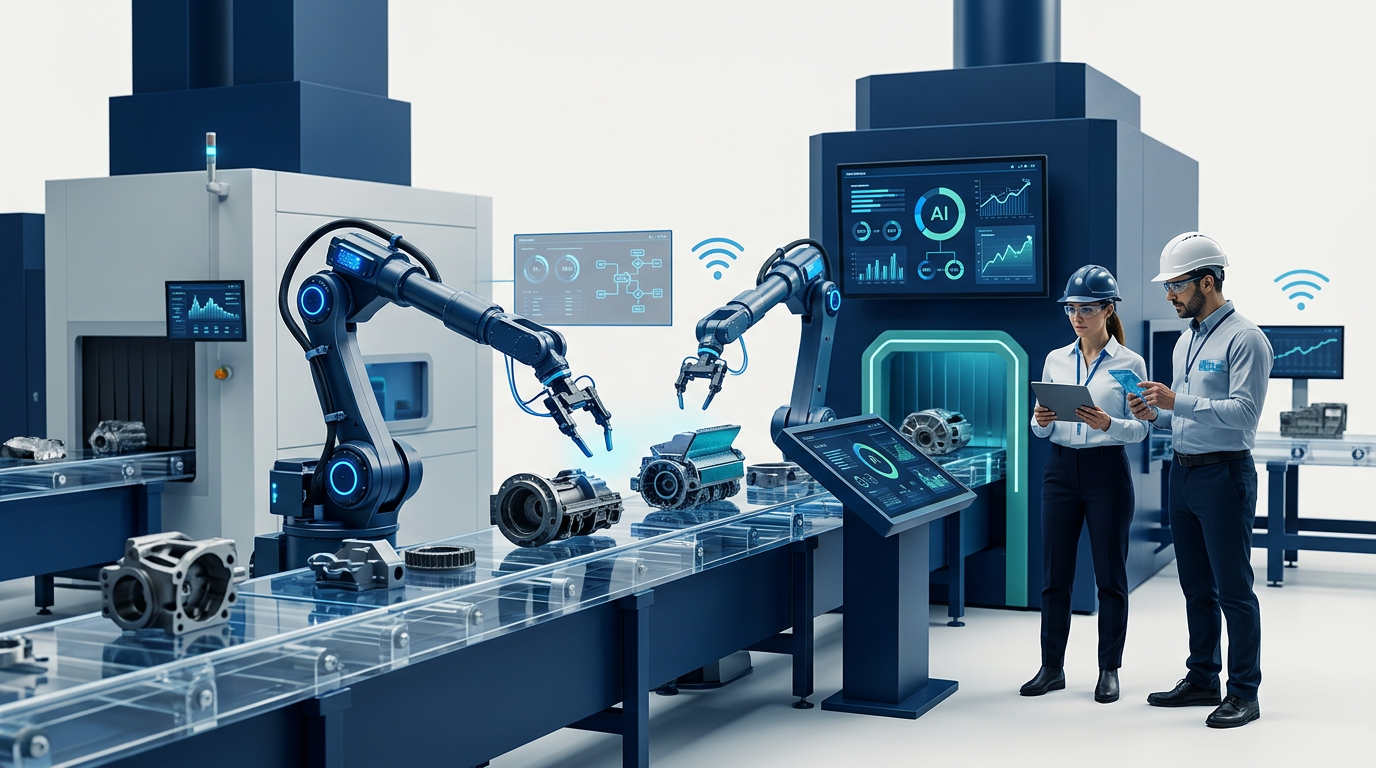
AI predictive recycling is at the heart of this revolution. Traditionally, sorting industrial waste is a costly, slow, and often imprecise process. AI, through machine learning algorithms and advanced sensors, can identify and separate materials with unparalleled precision, thereby reducing contamination and increasing the quality of recycled materials. This directly translates into higher valorization of secondary materials and a reduction in ultimate waste. For example, computer vision and AI-based systems can sort hundreds of tons of waste per hour, with a much lower margin of error than manual sorting. This ability to extract more value from complex waste streams transforms industrial recycling into a highly profitable activity. Alternative investments in companies developing these Waste Management Tech technologies are particularly attractive.
3. AI in Product Lifecycle Management: From Design to Recycling
Beyond simple sorting, AI impacts the entire value chain of the circular economy. It intervenes from the product design phase, assisting engineers in choosing easily recyclable materials and optimizing dismantlability. This is known as "Design for Circularity." Furthermore, AI can track material traceability through technologies like blockchain, thereby guaranteeing the authenticity and quality of secondary raw materials. Downstream, AI powers industrial symbiosis economy platforms, where the waste of one company becomes the resource of another. Algorithms can identify synergy opportunities between industries, maximizing the use of by-products. This aspect of the circular economy offers significant competitive advantages, reducing supply and waste treatment costs for the companies involved.
4. Impact Investing 2026: Investing in a Sustainable and Lucrative Future
Impact Investing 2026 Europe explicitly recognizes the potential of the AI-powered circular economy. Investing in this sector is no longer just about ethics, but also about robust financial performance. Innovative companies in the AI circular economy show high growth rates, attracting the attention of investors seeking to generate a positive impact alongside significant financial returns. Private equity funds and asset managers are massively turning to startups and SMEs that develop AI solutions for recycling, resource management, and reverse logistics. An increase in fundraising is observed in this sector, with valuations reflecting the disruptive potential of these technologies. The European regulatory framework, favorable to the transition towards a more circular economy, provides a conducive environment for these ESG investments. For those wishing to diversify, our teams of experts in alternative investments are at your disposal to analyze these opportunities. You can also consult our page on alternative investment offerings to learn more.
5. Challenges and Opportunities in the Sector
Despite its potential, the implementation of the AI Circular Economy 2026 is not without challenges. The integration of complex systems, the initial cost of AI technologies, and the need for specific skills are barriers. However, these challenges also create opportunities for high-value-added companies. Developers of AI software for optimizing material flows, manufacturers of advanced sorting robots, and consultants specializing in the circular transformation of industries are now key players. Furthermore, data standardization and system interoperability are essential to unlock AI's potential on an industrial scale. Companies that can offer integrated solutions, from sensor to data analysis, will be particularly well-positioned in this growing market. This trend is found in other innovative sectors such as semiconductors or quantum computing.
6. Alpha Invest & Securities: Your Partner in the Circular Economy
At Alpha Invest & Securities, we anticipate the major trends of tomorrow. With recognized expertise in alternative investments and a deep understanding of applied Artificial Intelligence, we identify the most promising opportunities in the AI Circular Economy 2026. Our rigorous approach and extensive network allow us to select high-potential projects, offering our clients attractive risk-adjusted returns and measurable environmental impact. We support institutional and qualified investors in building a future-oriented portfolio. Our team of experts is ready to present concrete projects and innovative investment strategies in this area, from biotech to energy and private equity. If you wish to learn more about our company's expertise, do not hesitate to discover our team of investment experts.
| Investment Criterion | Key Advantage | Maturity Level (2026) |
|---|---|---|
| Profitability | Very High | Emerging to Growth |
| ESG Impact | Strongly Proactive | Essential |
| Industrial Resilience | Improved | Strong |
| Technological Innovation | Crucial | Revolutionary |
| Sustainability | Durable | Structuring |
- Not integrating AI into the industrial recycling strategy: leads to a loss of competitiveness and valorization opportunities.
- Underestimating the initial cost of AI: requires realistic budget planning and a long-term investment vision.
- Ignoring regulatory developments in the circular economy: non-compliance can lead to penalties and hinder innovation.
- Evaluate the integration of AI solutions in your recycling operations to identify bottlenecks.
- Seek partnerships with startups specialized in AI predictive recycling or Waste Management Tech.
- Diversify your alternative investments portfolio with funds focused on the AI Circular Economy 2026.
- Schedule an appointment with one of our experts to explore personalized investment opportunities in this field.
- Ellen MacArthur Foundation | https://www.ellenmacarthurfoundation.org
- European Commission | https://ec.europa.eu
- World Economic Forum | https://www.weforum.org
What is the AI Circular Economy 2026? It is the application of Artificial Intelligence to optimize circular economy processes, notably industrial recycling, resource management, and waste reduction, with a view to increased profitability and positive environmental impact by 2026. Why is investing in industrial recycling via AI profitable? AI improves sorting precision, reduces operational costs, increases the quality of recycled materials, and enables better waste valorization, transforming liabilities into assets and generating new lucrative business models. What is Alpha Invest & Securities' role in this field? Alpha Invest & Securities is an expert in alternative investments that identifies and structures opportunities in the AI Circular Economy 2026, offering investors access to innovative projects with high financial and environmental potential.
✨ Written with SEO Magic AI — Automated SEO Content Generation