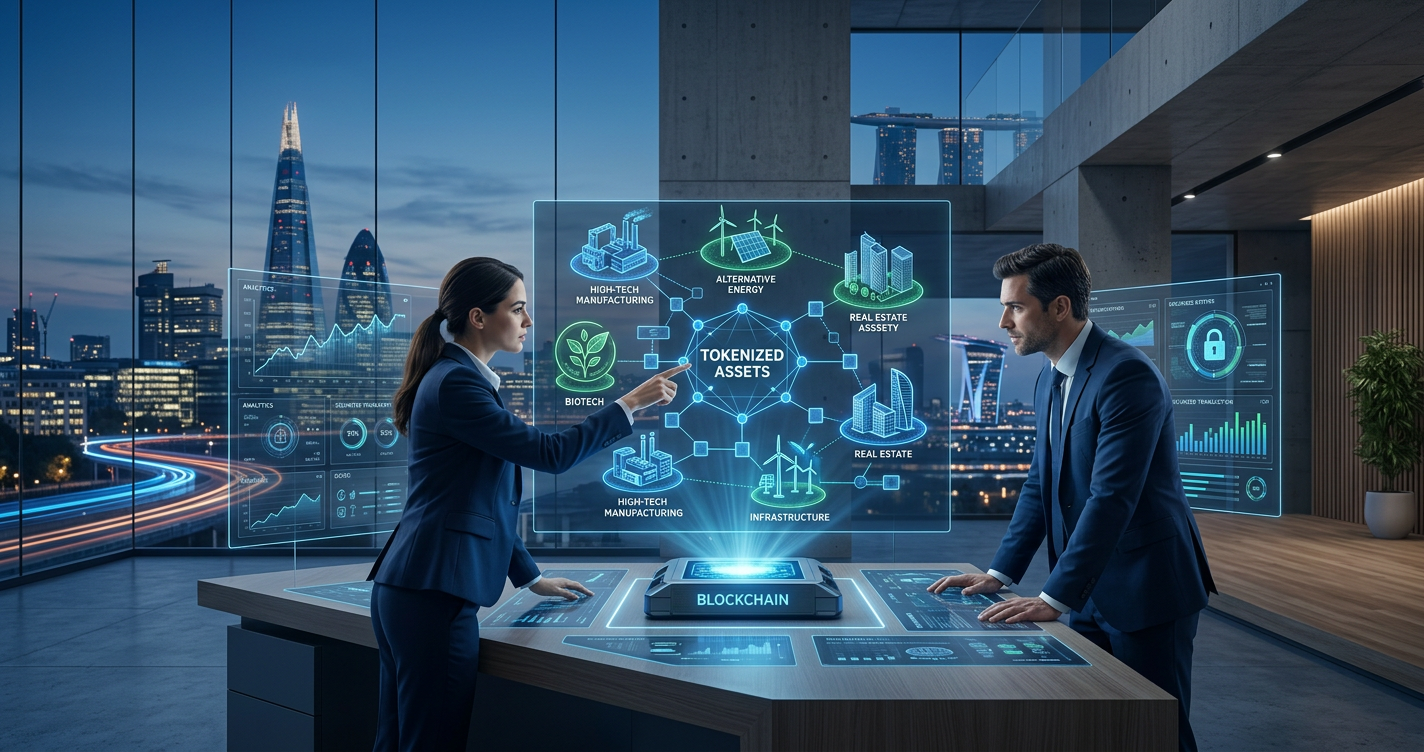
Blockchain is much more than just a technology underlying cryptocurrencies. By 2026, its disruptive potential extends to the entire financial landscape, offering unprecedented investment opportunities. This article explores how, thanks to Blockchain Technology 2026, investors can diversify and optimize their portfolios, going beyond conventional digital assets.
In 2026, Blockchain Technology redefines investment with the tokenization of Real-World Assets (RWA) and the emergence of Web3 financial infrastructure. For astute investors, this means opportunities for increased diversification, liquidity, and transparency compared to traditional asset classes. Strategic positioning is crucial to capture the growth of this new financial paradigm.
1. Blockchain Technology 2026: A Pillar of the Digital Economy
Blockchain Technology 2026 is now recognized as a fundamental pillar of the digital economy, extending far beyond its initial application, Bitcoin. Its decentralized, secure, and immutable nature paves the way for transformative applications across various sectors. We are witnessing a widespread adoption of blockchain protocols, not only for managing financial transactions but also for traceability in supply chains, digital identity management, and automation via smart contracts. Institutional adoption is accelerating, with central banks exploring Central Bank Digital Currencies (CBDCs) and companies integrating blockchain for greater efficiency and transparency. The global blockchain market is expected to reach several hundred billion dollars by the end of the decade, underscoring the magnitude of this revolution.
2. Real-World Asset (RWA) Tokenization: An Investment Revolution
Real-World Asset (RWA) tokenization, a true driver of modern investment in 2026, represents a major breakthrough. It involves transforming the ownership of a physical asset (real estate, artwork, precious metals, unlisted shares, etc.) into a digital token on a blockchain. This approach offers increased liquidity, fractional ownership of costly assets, and unprecedented transparency thanks to transaction traceability and immutable ledgers.
Why invest in RWAs in 2026?
- Portfolio diversification: Access asset classes that were previously difficult to reach.
- Reduced barriers to entry: Invest smaller amounts in high-value assets.
- Operational efficiency: Simplified transfer and settlement processes, reducing intermediaries and costs.
- Return potential: RWAs offer different correlations with traditional markets, potentially improving the risk-return profile. We anticipate that the market for tokenized assets could represent several trillion dollars by 2030, according to some estimates from major financial institutions. This is why Alpha Invest & Securities places Real-World Asset tokenization at the heart of its alternative investment strategies for 2026. Discover our alternative investment offerings to explore these opportunities.
3. Web3 Financial Infrastructure: The New Frontier
Web3 financial infrastructure is the backbone of this new era of investment. It encompasses an ecosystem of decentralized protocols, platforms, and applications (dApps) that enable the exchange, management, and valuation of digital assets in a more open and permissionless manner. From decentralized finance (DeFi) platforms to RWA marketplaces, this infrastructure ensures the security, speed, and interoperability of transactions. At Alpha Invest & Securities, we are convinced that mastering these new technical architectures is essential. Our Investment Expert Team constantly monitors protocol evolution to identify the most promising and secure opportunities for our clients.
4. Beyond Traditional Cryptocurrencies
While Bitcoin and Ethereum still dominate the market, blockchain investment 2026 extends far beyond. It now involves investing in underlying infrastructures (Layer 1, Layer 2), interoperability solutions, innovative decentralized finance (DeFi) projects, and, of course, the tokenization of real-world assets. For example, projects specializing in green infrastructure financing 2026 via tokens represent sustainable and profitable growth avenues. The objective is no longer just to speculate on the value of a single cryptocurrency but to participate in building the new digital economy by investing in its foundations and concrete applications. This requires in-depth market knowledge and constant strategic monitoring, skills that our team brings to every investor. For a more in-depth exploration, consult our perspective on institutional crypto 2026.
5. RWA Investment Strategies 2026 with Alpha Securities
Integrating RWAs and Blockchain Technology 2026 into an investment portfolio requires specific expertise. At Alpha Invest & Securities, we develop personalized strategies for our clients, focused on the rigorous selection of RWA projects with high potential and controlled risk. We support our investors in identifying the unique opportunities offered by this emerging market. Our experts conduct in-depth risk analyses 2026 for each proposal, ensuring that your capital is protected while aiming for optimal performance. Whether through dedicated funds, startup co-investments 2026 in pioneering tokenization companies, or specific management mandates, our approach is always tailor-made and aligned with your financial objectives. We invite you to contact us for an in-depth discussion on how to integrate RWA investment 2026 into your strategy. For SME leaders, the digital audit 2026 can help diagnose digital maturity and identify tokenization opportunities.
| Criterion | Advantage | Level |
|---|---|---|
| RWA Liquidity | Access to secondary market | High |
| Blockchain Transparency | Immutable ledger | Very High |
| Diversification | New asset classes | High |
| Technological Complexity | Requires expertise | Moderate |
| Legal Protection | Evolving framework | Medium |
- Common error 1: Ignoring current regulations. The legal framework around digital assets and RWAs is still under construction and varies by jurisdiction. Legal due diligence is essential.
- Common error 2: Focusing solely on returns without understanding the underlying technology. A minimal technical understanding of the protocols and blockchains used is crucial.
- Common error 3: Not diversifying within tokenized assets. Just as with traditional assets, sectoral and geographical diversification is necessary to mitigate risks.
- Get informed: Deepen your understanding of Blockchain Technology 2026 and tokenized assets.
- Assess your risk profile: Determine what portion of your portfolio can be allocated to these innovative investments.
- Consult experts: Schedule an appointment with specialists like Alpha Invest & Securities for a personalized strategy.
- Diversify: Explore the different facets of RWA investment 2026 to optimize your returns.
- CoinGecko | https://www.coingecko.com/
- Nasdaq | https://www.nasdaq.com/
- World Economic Forum | https://www.weforum.org/
- Blockchain.com | https://www.blockchain.com/
What is Real-World Asset (RWA) tokenization? RWA tokenization is the process of converting the ownership rights of a physical asset (real estate, gold, art) into a digital token on a blockchain. This allows for fractionalization, increased liquidity, and transparent traceability. Why is blockchain more than just a cryptocurrency? Blockchain is a distributed ledger technology that ensures data security and traceability. Beyond cryptocurrencies, it is used for smart contracts, supply chain management, digital identity, and real-world asset tokenization. What are the advantages of investing in RWAs in 2026? Advantages include access to previously illiquid markets, fractional ownership of costly assets, increased transparency, and the potential for portfolio diversification with assets that are lowly correlated with traditional markets.
✨ Written with SEO Magic AI — Automated SEO Content Generation