The future of healthcare is intrinsically linked to technological innovation. At the heart of this transformation is the Internet of Medical Things (IoMT), a rapidly expanding sector that promises to redefine healthcare delivery, chronic disease management, and overall well-being. As investors, understanding the dynamics of this emerging market is crucial.
IoMT represents a major investment opportunity for 2026, propelling telemedicine and prevention through the integration of sensors and AI into medical devices. Players who capitalize on the synergy between biotech, AI, and health data will be tomorrow's leaders.
1. Understanding IoMT: A Connected Ecosystem Serving Healthcare
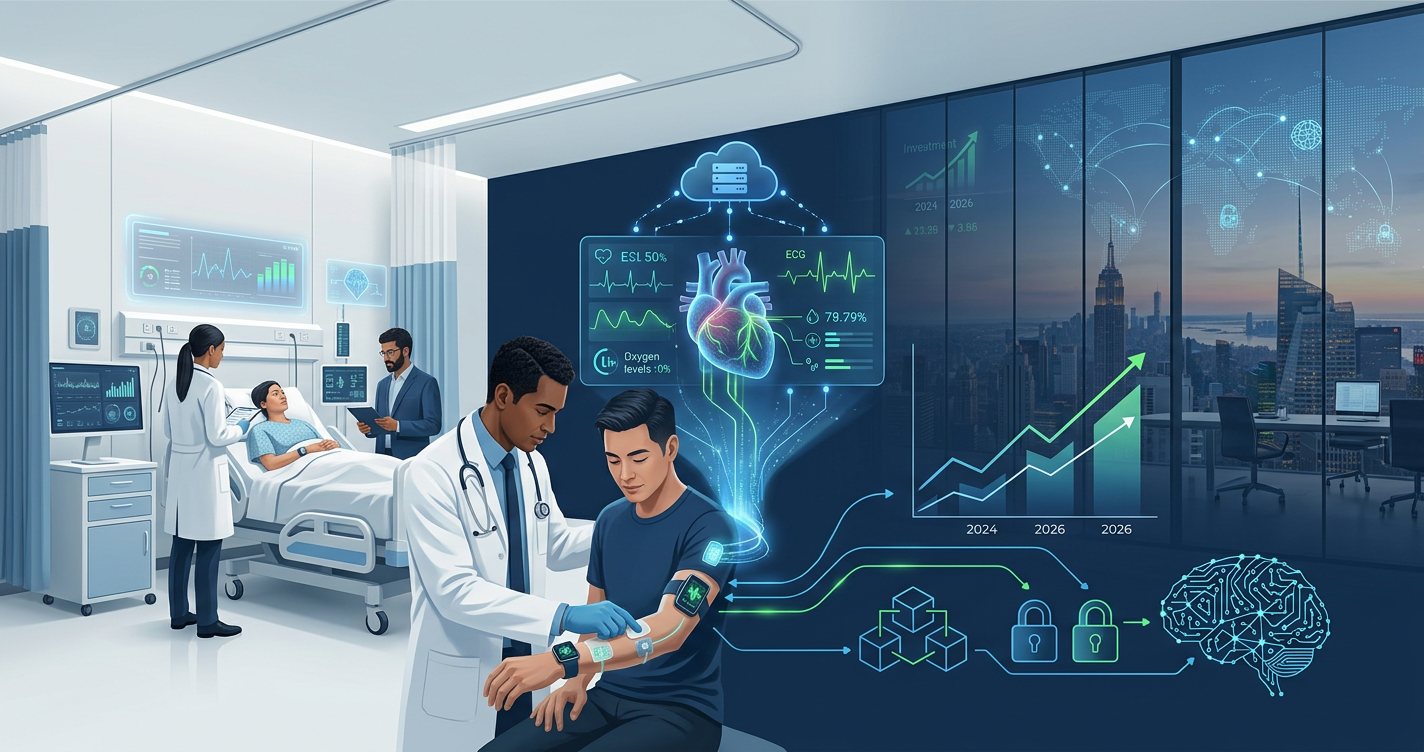
The Internet of Medical Things (IoMT) refers to a network of connected medical devices and sensors that collect, analyze, and transmit health data in real time. It is a convergence of IoT (Internet of Things) and medicine, aiming to improve diagnostics, patient monitoring, and treatment efficacy. This sector, projected to reach 250 billion dollars by 2026 according to some estimates, is fueled by significant advancements in sensors, artificial intelligence, and connectivity. These devices include a wide range of tools, from connected blood glucose monitors to wearable cardiac sensors, smart pills, and hospital equipment under constant surveillance. The objective is to create a continuous and relevant information flow for healthcare professionals, enabling more informed decision-making and proactive intervention.
2. IoMT Growth Drivers in 2026
Several key factors contribute to the spectacular rise of IoMT. One of the most important is the aging global population, which generates increasing demand for telemedicine and remote monitoring solutions for chronic diseases. In France, for example, over 15 million people suffer from chronic diseases, a figure that underscores the urgency of innovative solutions. The integration of artificial intelligence (AI) and machine learning into IoMT devices is another major catalyst. AI enables the analysis of enormous volumes of health data, identification of patterns, and prediction of risks, thereby offering more accurate diagnoses and personalized treatment plans. For investors seeking opportunities in AI and biotech, IoMT represents fertile ground. You might be interested in our insights on "Accessible Gene Therapies 2026," which shows how these sectors converge.
3. Key Sectors and IoMT Investment Opportunities
The IoMT market is diversified, offering opportunities across several sub-sectors:
- Home monitoring devices: Wearable sensors, connected scales, glucometers. This segment is crucial for the prevention and management of chronic diseases, reducing hospitalizations.
- Telehealth technologies: Remote consultation platforms, patient data management software. Demand for these solutions has boomed, particularly with recent health disruptions.
- Smart hospital equipment: Vital signs monitors, connected infusion pumps, smart beds. These innovations optimize intensive care management and patient safety.
- Software and data analysis platforms: AI-driven solutions to interpret data collected by IoMT, providing valuable insights for clinicians and research. Investing in IoMT also means betting on companies that develop cybersecurity solutions specifically adapted to health data protection, a critical issue for this sector.
4. IoMT Challenges: Security, Regulation, and Interoperability
Despite its potential, IoMT faces significant challenges. Health data security is paramount; any breach could have disastrous consequences. Investors must ensure that the companies they invest in implement robust security protocols. Another major challenge is regulation. Standards vary from country to country, and compliance is complex. Interoperability of devices is also a crucial issue. For IoMT to reach its full potential, different devices and platforms must be able to communicate and exchange data seamlessly. Initiatives aimed at creating universal standards are therefore very promising.
5. Future Prospects and Societal Impact of IoMT
IoMT is not just a technological trend; it is a driver of societal transformation. It will make healthcare more accessible, more personalized, and more preventive. Imagine a future where early disease detection is the norm, where the elderly can live independently longer thanks to remote monitoring, and where treatments are adapted in real time to each patient's response. IoMT adoption is also expected to lead to significant long-term healthcare cost reductions, by decreasing hospitalizations and optimizing resources. To learn more about alternative investment opportunities in cutting-edge sectors, please consult our alternative investment offerings.
| Criterion | Advantage | Level |
|---|---|---|
| Market Growth | High potential (CAGR > 20%) | Excellent |
| Societal Impact | Improvement of public health | Very High |
| Technological Innovation | AI, sensors, 5G connectivity | Advanced |
| Investment Opportunities | Diversified (devices, software, services) | Broad |
- Neglecting cybersecurity: Investing in IoMT solutions without robust data protection is a critical mistake.
- Underestimating regulatory complexity: Healthcare markets are highly regulated; compliance is essential for success.
- Ignoring interoperability: Isolated solutions have limited value. The ability to integrate into a broader ecosystem is key.
- Evaluate IoMT companies with strong data protection and regulatory certifications.
- Look for players that integrate AI for predictive analytics and personalized care.
- Diversify investments within the IoMT sector to capture growth from different segments.
- Contact Alpha Invest & Securities for an in-depth analysis of investment opportunities in IoMT.
- Grand View Research | https://www.grandviewresearch.com/industry-analysis/internet-of-medical-things-iomt-market
- Deloitte | https://www2.deloitte.com/us/en/insights/industry/health-care/internet-of-medical-things-healthcare-technology.html
- Haute Autorité de Santé (HAS) | https://www.has-sante.fr
What is IoMT and how does it differ from IoT? IoMT is the Internet of Things specifically applied to the medical field. It uses connected devices to collect and transmit health data, unlike IoT which encompasses all connected objects. What are the main risks associated with investing in IoMT? The main risks include cybersecurity of health data, strict regulatory compliance, and the need for interoperability between different devices and platforms. How does AI improve IoMT? AI enables the analysis of vast datasets collected by IoMT to identify patterns, anticipate health problems, personalize treatments, and optimize care effectiveness. Is IoMT limited to hospitals? No, IoMT extends well beyond hospitals, including home monitoring devices, telehealth platforms, and wearables for personal health management and prevention.
✨ Written with SEO Magic AI — Automated SEO Content Generation