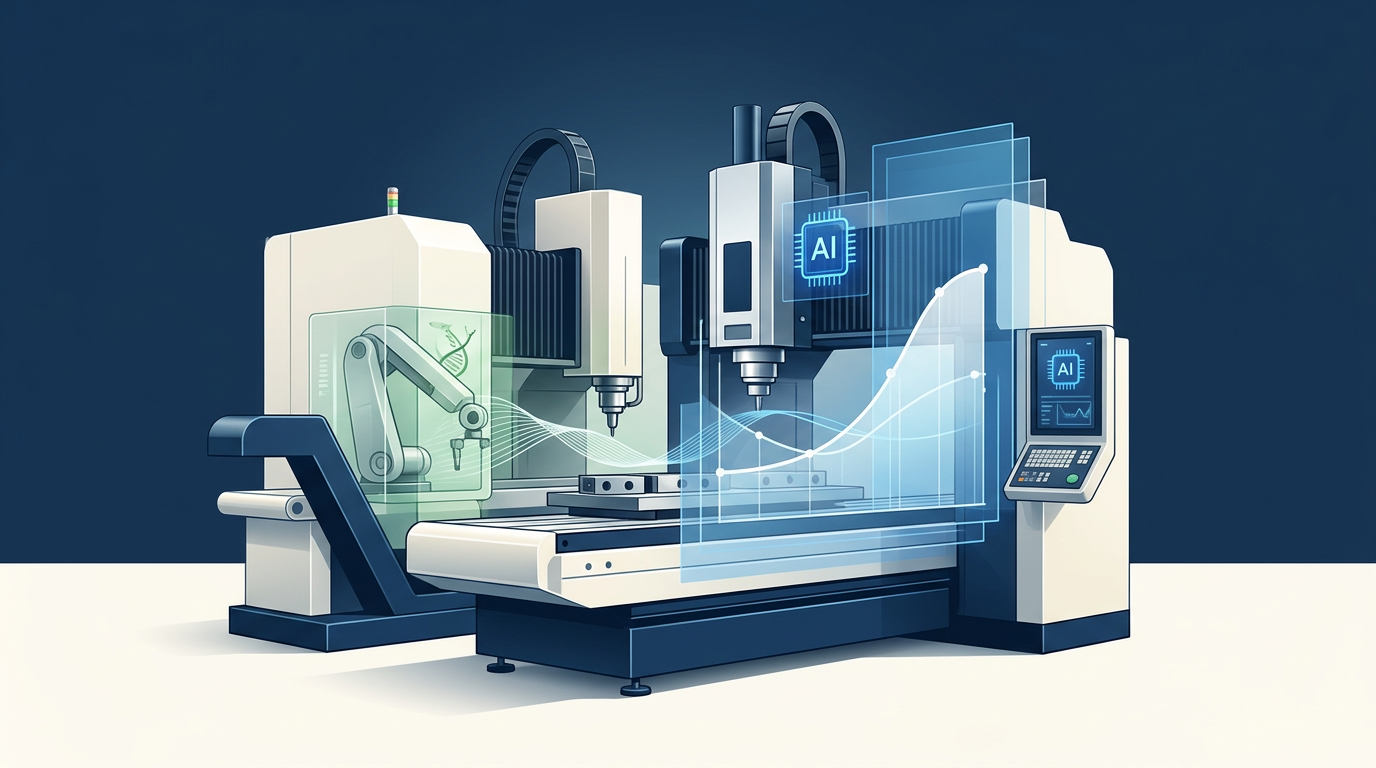
In a constantly evolving economic environment, the ability to innovate and equip oneself quickly is crucial for businesses, especially SMEs. However, the acquisition of production equipment often represents a heavy investment, significantly impacting cash flow. Financial leasing 2026 emerges as a strategic solution for deploying new production capacities without tying up valuable capital.
Financial leasing allows businesses to acquire essential equipment without significant upfront cash outlays, thereby optimizing CAPEX and liquidity. It offers flexibility, tax advantages, and cost predictability, accelerating production and growth in 2026.
1. Understanding Financial Leasing 2026: A Strategic Lever
Financial leasing, or industrial lease financing, is a financing solution that allows a company to use professional equipment (machine tools, industrial vehicles, IT equipment, etc.) without acquiring it outright. Essentially, it is a rental agreement with a purchase option at term. For 2026, this approach becomes even more relevant as innovation cycles accelerate, making equipment obsolescence more rapid. This financing method offers an attractive alternative to direct purchase or conventional bank loans. The lessee company pays periodic rents to the lessor (often a financial institution), which remains the legal owner of the assets. At the end of the contract, the lessee generally has three options: exercise the purchase option to acquire the asset at its residual value, return the asset, or renew the lease contract.
2. Key Advantages of Industrial Lease Financing 2026 for SMEs
Industrial lease financing 2026 offers considerable advantages, particularly for small and medium-sized enterprises wishing to modernize or expand their production capabilities.
- Cash Flow Preservation: One of the major benefits is the absence of a significant initial cash outlay, allowing liquidity to be retained for other strategic investments or to meet unforeseen circumstances.
- CAPEX Optimization: Leasing transforms capital expenditure (CAPEX) into operating expenditure (OPEX), which can improve financial statements and apparent profitability.
- Flexibility and Adaptability: Leasing contracts can be adapted to the specific needs of the company (duration, rent amount). They also facilitate regular technological updates, preventing the company from being stuck with obsolete equipment.
- Tax Advantages: Lease payments are generally tax-deductible from the company's taxable income, offering a significant tax benefit.
- Budget Control: Fixed and predictable rents allow for better long-term budgetary planning. These advantages are all the more relevant in the current context where liquidity management is paramount. Moreover, many companies use similar strategies to finance their growth, such as Venture Loan 2026: Growth Lever Without Dilution or Revenue Based Financing 2026: Innovative Growth Lever.
3. SME Equipment Financial Rental: Concrete Applications
SME equipment financial rental finds various applications across many sectors. Whether it's manufacturing, agri-food, logistics, or even services, the principle remains the same: acquiring the use of an asset without owning it.
- Production Machines: Acquisition of production lines, industrial robots, CNC machine tools.
- IT Hardware and Software: Servers, high-performance workstations, expensive software licenses.
- Utility Vehicles and Transport Fleets: Trucks, vans, construction machinery.
- Medical Equipment: Imaging devices, laboratory equipment. The diversity of eligible assets makes leasing a versatile tool for any SME looking to grow. For SMEs, investment capacity can be crucial for their competitive positioning, as detailed in our guide on SME Growth Financing 2026: The Strategic Guide.
4. CAPEX Optimization 2026: Beyond Simple Financing
CAPEX optimization 2026 through financial leasing is a strategic approach that goes far beyond the simple acquisition of equipment. It is part of a global financial policy aimed at maximizing shareholder value and ensuring the company's sustainability. By reducing the need for heavy initial investments, leasing frees up capital that can be reallocated to higher value-added activities, such as R&D, market expansion, or process improvement. This directly contributes to organic growth and the company's overall performance. This is an approach also adopted by Daniel Vautrin, an expert in fundraising and balance sheet optimization, as seen through his Lumen Finances Case Studies.
5. Choosing the Right Partner for Your Financial Leasing
Choosing the right financial partner is crucial for the success of your leasing operation. It is essential to ensure that the lessor understands your specific needs and offers terms adapted to your business model. At Alpha Invest & Securities, we assist our clients in selecting the most appropriate financing solutions, thanks to our expertise in alternative investments. Look for a partner capable of offering:
- Clear and transparent contractual terms.
- Flexibility in contract terms (duration, end-of-contract options).
- Personalized support and advice.
- A good understanding of your industry and your challenges. Our Investment Expert Team is ready to guide you.
6. Outlook 2026: The Impact of Leasing on Competitiveness
In 2026, corporate competitiveness will be more than ever linked to their ability to quickly integrate the latest technological advances. Financial leasing makes it possible to meet this imperative by facilitating access to advanced production equipment without burdening investment budgets. Whether for the adoption of Artificial Intelligence in production processes or the integration of new technologies in biotech, leasing offers a fast and controlled access route. The impact of AI Revolutionizes M&A & Investment in 2026 underscores the importance of an agile investment strategy. It thus contributes to maintaining a high level of operational efficiency and strengthening the company's competitive position in the market.
| Criterion | Advantage of Financial Leasing | Level |
|---|---|---|
| Cash Flow | Preserved | High |
| CAPEX | Optimized (transformed into OPEX) | High |
| Flexibility | High (duration, options) | High |
| Taxation | Optimized (deductible rents) | Medium |
| Modernization | Accelerated (easy renewal) | High |
- Not evaluating all end-of-contract options: The purchase option, return, or renewal have different financial and strategic implications. Not anticipating them can be costly.
- Ignoring the total cost of leasing: Although rents are attractive, it is crucial to compare the total cost of leasing over the term with a purchase or a classic loan, including associated costs (insurance, maintenance if included).
- Underestimating the importance of contractual clauses: Contract details (penalties, termination conditions, liability in case of damage) must be meticulously examined.
- Accurately assess your equipment needs and anticipated usage duration.
- Compare leasing offers from several financial partners, considering the total cost and associated services.
- Negotiate contract terms to best match your financial and operational strategy.
- Integrate financial leasing into your 2026 budget planning to optimize your CAPEX and preserve your cash flow, then Contact Alpha Invest & Securities for personalized support.
Is financial leasing suitable for all companies? Yes, financial leasing is a very flexible solution that can adapt to the needs of many companies, from startups to large corporations, and especially SMEs looking to optimize their CAPEX and cash flow. What is the difference between financial leasing and lease financing? Financial leasing is a generic term that encompasses equipment lease financing (for equipment) and real estate lease financing. In France, the term "crédit-bail" (lease financing) is most commonly used. It refers to the same principle of rental with a purchase option. Does financial leasing include equipment maintenance? Not systematically. In most financial leasing contracts, equipment maintenance remains the responsibility of the lessee. However, there are evolutionary leasing options or operating leases that can include maintenance services, for a higher rent.
✨ Written with SEO Magic AI — Automated SEO Content Generation