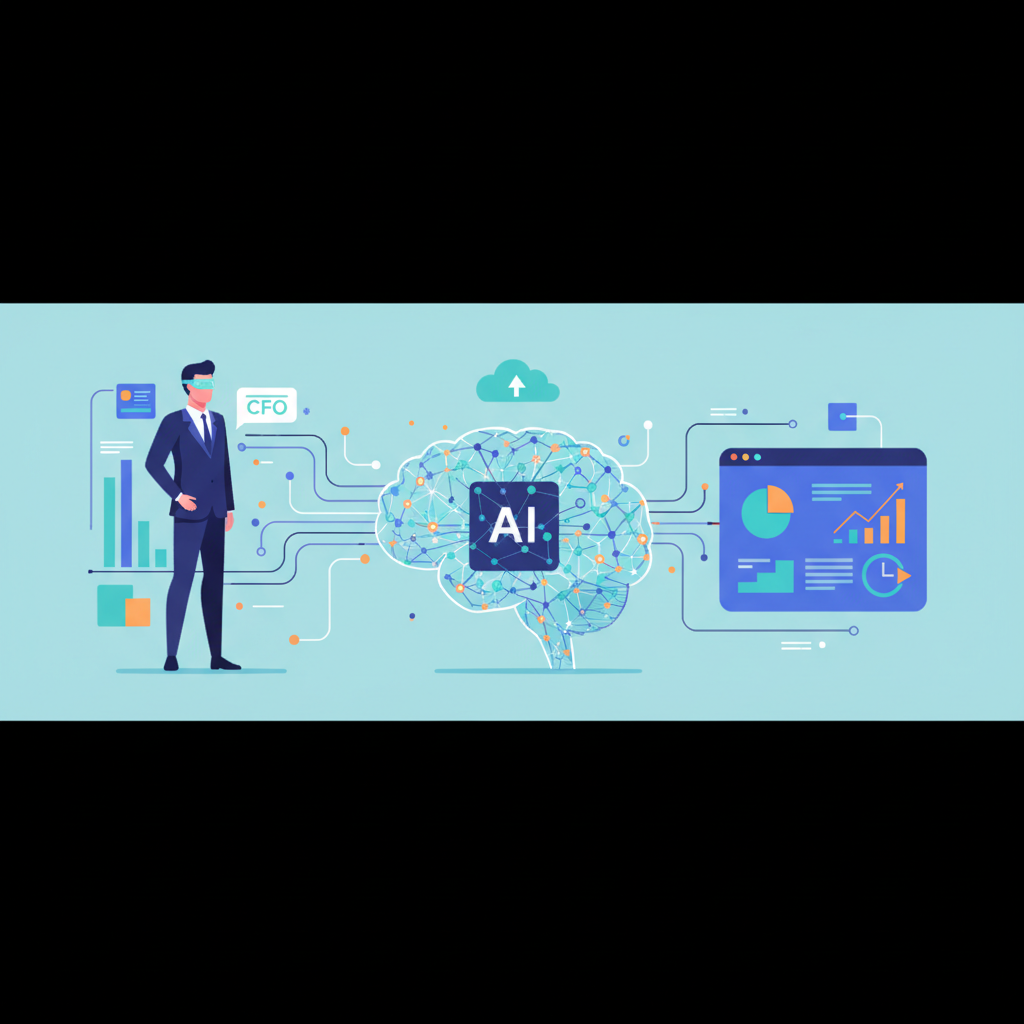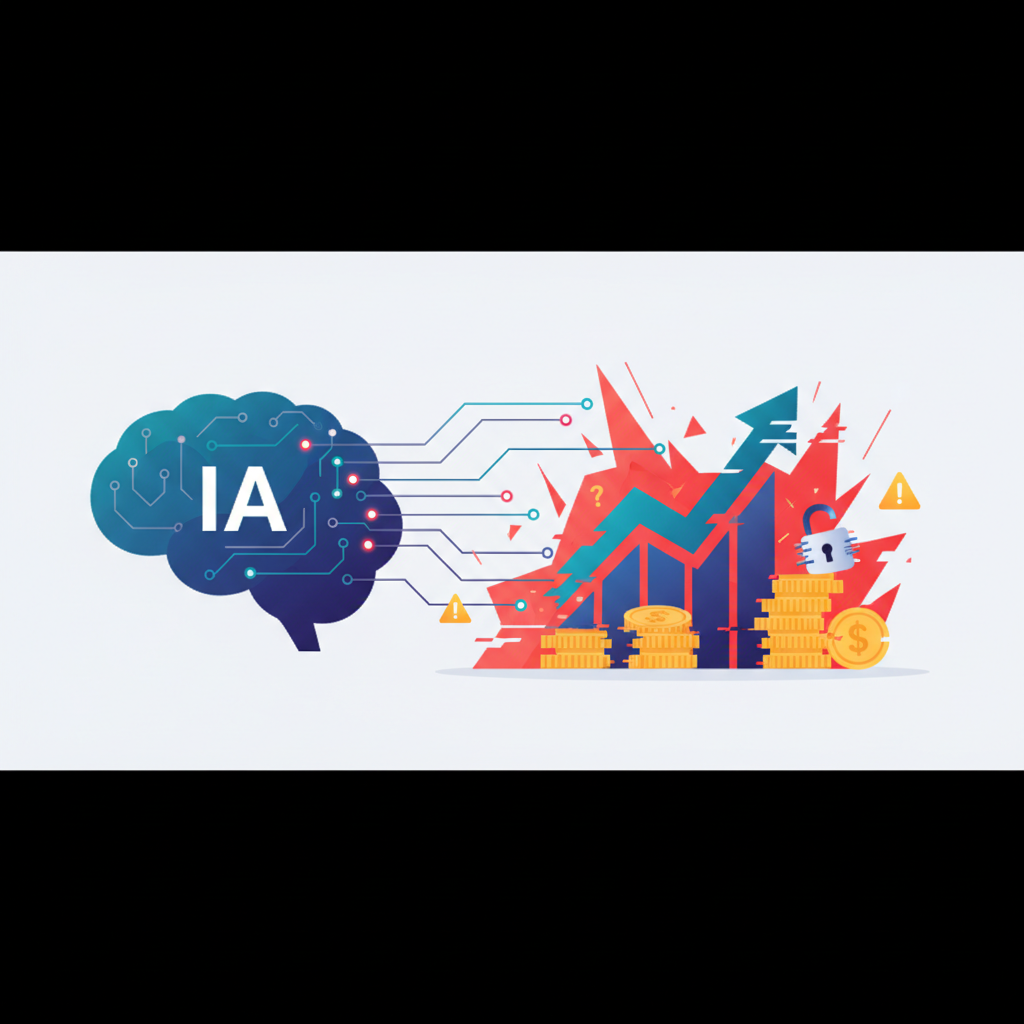
Artificial Intelligence (AI) is revolutionizing numerous sectors, and financial investment is no exception. It promises optimized returns and informed decision-making. However, behind this promise lie specific AI investment risks that are crucial to understand before entrusting your capital to autonomous systems. This article decrypts the potential pitfalls associated with AI investment.
AI investment presents real risks, such as algorithmic bias, AI volatility, cybersecurity, and AI financial compliance challenges. A thorough understanding and diversification are essential to manage these threats and protect your capital.
AI Investment: The Real Risks to Your Capital
The rapid rise of Artificial Intelligence is transforming the financial landscape, offering unprecedented opportunities. Yet, like any disruptive technology, it introduces its share of challenges and AI investment risks for savvy investors. Understanding these risks is fundamental to navigating this new ecosystem with confidence and securing your investments.
1. Algorithmic Biases and Their Financial Consequences
AI algorithms are designed to learn and make decisions based on vast volumes of data. However, if this data is incomplete, imbalanced, or reflects existing prejudices, the AI can reproduce and amplify these financial algorithmic biases.
How Biases Affect Your Money
- Erroneous investment decisions: A biased algorithm could, for example, underestimate innovative companies in emerging sectors or disadvantage certain markets, leading to missed opportunities or underperforming investments.
- Exacerbated market behaviors: Biases can lead to investment concentrations in already popular stocks, creating speculative bubbles and increasing AI volatility in the market.
- Indirect discrimination: In credit granting or insurance underwriting, a bias could target certain demographics, indirectly impacting the performance of financial instruments linked to these groups. The consequences can be asset price distortions, underperformance of your portfolio, or even significant losses if AI decisions are not regularly audited and adjusted.
2. Increased Market Volatility and Cybersecurity
The integration of AI into high-frequency trading systems can exacerbate AI volatility in markets. Decisions made in microseconds by algorithms can create rapid and unpredictable price movements, rendering traditional investment strategies obsolete.
The Specter of Cybersecurity
One of the most pressing AI investment risks is AI investment cybersecurity. AI systems handle sensitive data, making them prime targets for cybercriminals.
- Attacks on AI models: Hackers can attempt to inject corrupted data (poisoning) to manipulate algorithm predictions, or steal proprietary models.
- Platform security flaws: AI-based investment platforms, if not robust, can be compromised, leading to theft of personal and financial data, or even unauthorized transactions on accounts.
- Threat of financial “deepfakes”: AI can be used to create false but highly convincing information, potentially influencing markets or inciting fraudulent investments. A security breach can have disastrous repercussions for investors, ranging from direct financial loss to identity theft.
3. Regulatory Compliance and Lack of Transparency
The rapid evolution of AI poses a major challenge for regulators. Legal frameworks struggle to keep pace, creating a gray area regarding AI financial compliance and accountability.
Transparency and Accountability Issues
- Algorithmic black box: Many AI models are so complex that it is difficult to understand how they arrive at their conclusions. This "black box" makes auditing and justifying investment decisions complex, particularly in the event of a dispute.
- Responsibility in case of failure: In the event of losses due to an AI decision, determining who is responsible (developer, user, regulator) is a thorny legal question, adding an indirect but significant AI investment risk.
- Adapting Regulations: Financial authorities are still seeking the right balance between innovation and investor protection. The absence of clear rules can expose investors to unethical practices or systemic failures. This lack of regulatory clarity can lead to uncertainties regarding the validity of contracts or transactions, and potential fines for institutions that do not comply with (future) standards.
4. Technological Dependence and Single Points of Failure
The adoption of AI by financial markets introduces increased technological dependence. System failures, software errors, or infrastructure problems can have much broader consequences than in less automated environments.
Systemic Risks
- Technical failures: A software or hardware failure in a crucial AI system could paralyze trading operations, lead to massive over-selling or over-buying, and cause flash crashes.
- Programming errors: Even the best systems contain bugs. A small error in a trading algorithm's code could lead to millions of incorrect transactions before being detected.
- Vulnerability to coordinated attacks: A sophisticated attack against a key component of the financial AI infrastructure could spread rapidly and destabilize entire sectors of the economy. This dependence creates single points of failure where a single error or attack can have macroeconomic repercussions.
5. Over-Optimization (Overfitting) and Lack of Robustness
AI models can be over-optimized ("overfitted") for historical data, meaning they perform admirably on past data but fail miserably when market conditions change or new events occur.
Fragility in the Face of the Unknown
- Sensitivity to changing conditions: Financial markets are dynamic and subject to "black swans" (unforeseen and highly improbable events). An AI model too calibrated to the past will struggle to adapt to unprecedented situations.
- Lack of adaptability: Unlike human intuition, AI does not always understand the underlying causes of market movements. It can therefore be ineffective when usual cause-and-effect relationships are broken.
- False confidence: Investors may place excessive trust in AI predictions that appear to perform well in retrospect, without understanding their fragility in the face of unmodeled events. This weakness can translate into mediocre performance or significant losses when algorithms are confronted with market environments they have never encountered during their training.
| Criterion | Potential AI Advantage | Current Risk Level (Average) |
|---|---|---|
| Data Analysis | Unmatched Speed and Volume | High (Bias, Complexity) |
| Investment Decision | Objectivity and Responsiveness | Moderate (Overfitting, Incomprehensible) |
| Portfolio Management | Continuous Optimization | Moderate (Technological Dependence) |
| Market Prediction | Identification of Hidden Patterns | High (Volatility, Cybersecurity) |
| Regulatory Compliance | Automation of Checks | High (Rapid Evolution, Black Box) |
- Frequent Error 1: Believing that AI is infallible and does not require human supervision. AI relies on past data and can fail when faced with the unknown or errors in its training data.
- Frequent Error 2: Ignoring AI investment risks related to cybersecurity. Not verifying the robustness of the platforms where you invest your money.
- Frequent Error 3: Not diversifying investments under the pretext that AI manages your portfolio. Even with AI, diversification remains the cornerstone of a sound strategy.
- Educate yourself on the basics of financial AI: Understand how it works and its limitations before investing.
- Favor transparent platforms: Choose services that clearly explain the logic of their investment algorithms.
- Diversify your investments: Don't put all your eggs in one AI basket. Mix with more traditional approaches.
- Demand regular audits: Ask AI service providers about their algorithmic bias and cybersecurity audit processes for secure AI investment.
- Autorité des marchés financiers (AMF) | https://www.amf-france.org/
- Financial Stability Board (FSB) | https://www.fsb.org/
- Banque de France | https://www.banque-france.fr/
Will AI make financial advisors obsolete? No, AI is a powerful tool for advisors. It automates repetitive tasks and provides advanced analyses, but human expertise, empathy, and understanding of individual objectives remain irreplaceable for comprehensive AI investment. How can I verify the robustness of an AI system? Ask questions about the origin of the data used, testing methodologies, the regulations to which the system is subject, and the cybersecurity measures implemented. Transparency is key. Are small investors more vulnerable to AI investment risks? Small investors can be if they do not have access to clear information or if they are tempted by risky AI offerings. It is crucial to prioritize regulated platforms and fully understand the services offered for each AI investment.