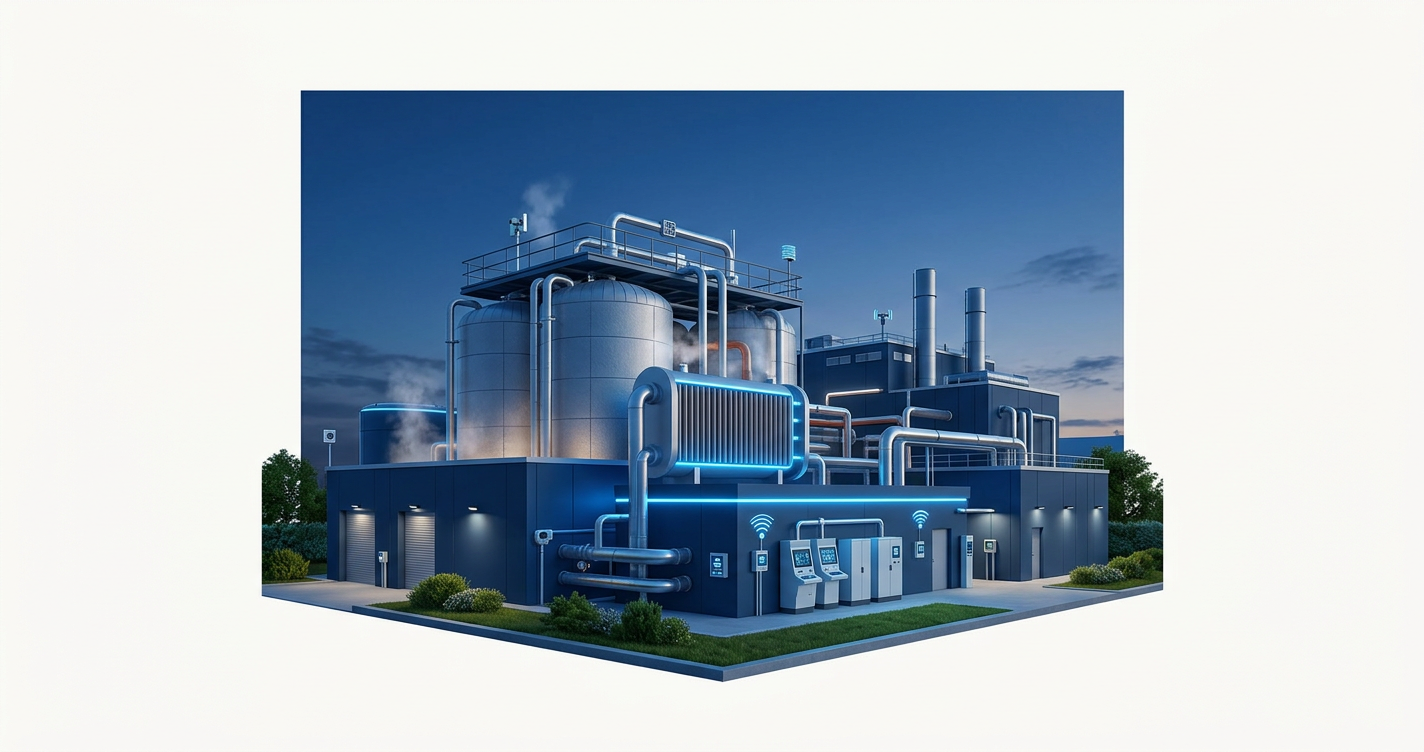
In a rapidly changing energy landscape, industry is seeking reliable, sustainable, and economically viable energy storage solutions. Thermal Storage 2026 emerges as a promising technology, capable of transforming businesses' energy management and offering unprecedented investment opportunities in the transition towards a decarbonized industry by 2026.
Thermal Storage 2026 is a key technology for industrial decarbonization, offering long-duration energy storage at a lower cost. It allows for the capture and release of thermal energy, thereby optimizing the integration of renewable energies and reducing the carbon footprint, creating significant investment opportunities.
Thermal Storage 2026: The New Alpha Industry Battery
1. The Dawn of Thermal Storage: A Response to Energy Challenges
The industrial world is at a critical turning point, facing the imperative of decarbonization and the volatility of energy prices. Traditional storage solutions, often costly and capacity-limited, struggle to meet growing needs. It is in this context that Thermal Storage 2026 positions itself as a pillar of the new energy revolution. Rather than storing electricity directly, this technology converts and stores energy in the form of heat or cold, to be released later.
Why is Thermal Storage Crucial?
- Integration of Renewable Energies: It absorbs surplus solar or wind energy for use when demand is high or production is low.
- Industrial Decarbonization: Heat-intensive industrial processes can now substitute fossil fuels with stored heat, drastically reducing their CO2 emissions.
- Reduction of Operational Costs: By optimizing energy use and avoiding consumption peaks, companies achieve substantial savings.
2. Key Technologies of Thermal Batteries 2026
The concept of Thermal Batteries 2026 encompasses various approaches, each with its specific characteristics and applications. These technologies are at the heart of innovation in the field of long-duration energy storage.
- Phase Change Materials (PCMs): These materials store energy as latent heat during a change of state (melting/solidification) and release it. They are compact and efficient for medium temperatures.
- Molten Salts: Widely used in concentrated solar power (CSP) plants, molten salts can store large amounts of heat at very high temperatures (up to 565°C) for long periods, up to several days.
- Thermo-Chemical Storage: Based on reversible chemical reactions, this method offers very high energy density and almost unlimited storage capacity without significant long-term loss.
- Sensible Heat Storage: Uses materials like sand, water, or rock to store heat by increasing their temperature. It is a robust and often less costly solution, suitable for large-scale applications. These advances position Thermal Batteries 2026 as a high-performance and sustainable alternative to conventional storage solutions, opening up promising investment avenues. To explore similar opportunities, discover our alternative investment offerings.
3. Industrial Applications and Economic Impact
The adoption of Thermal Storage 2026 is not limited to a single sector. Its potential is immense for various industries.
- Heavy industry (steel, cement): These sectors, among the most energy-intensive, can significantly reduce their consumption of fossil fuels.
- Power plants: To stabilize the grid and compensate for the intermittency of renewables.
- District and residential heating: Optimizing heat production and reducing costs for communities.
- Agriculture (greenhouses): Maintaining a constant temperature and reducing reliance on fossil fuels. Integrating these systems represents a global market estimated at several tens of billions of dollars by 2030. Savvy investors are already recognizing the exponential growth potential of these technologies.
4. A Lever for Investment and Sustainable Growth
Thermal Storage 2026 is not just a technical solution; it is a driver of economic growth and sustainable development. Companies that invest in these technologies position themselves as leaders in the energy transition.
- Increased green value: Carbon footprints improve, attracting environmentally conscious investors and consumers.
- Creation of green jobs: The development, manufacturing, and installation of these systems generate new opportunities for skilled employment.
- Energy security: Reduced dependence on fossil fuel imports and stabilization of prices. At Alpha Invest & Securities, we are convinced that investing in tomorrow's energy is a winning bet. Our Investment Expert Team selects the most promising opportunities in this rapidly expanding field.
5. Investment Outlook with Alpha Invest & Securities
The emergence of Thermal Storage 2026 and Thermal Batteries 2026 represents a major opportunity for institutional and professional investors. We identify innovative companies that develop high-value-added solutions with strong return potential. Our expertise covers a wide range of alternative investments, including energy, AI, and Biotech, ensuring strategic diversification of your portfolio. In 2023, global investments in thermal storage technologies exceeded $5 billion, with an average annual growth of 15% projected until 2030. These figures attest to the maturity and potential of this market. In parallel with thermal storage, we closely follow disruptive innovations like Commercial Nuclear Fusion 2026 which could also redefine the energy landscape.
| Criterion | Advantage | Level |
|---|---|---|
| Cost / kWh | Very Competitive | High |
| Storage Duration | Long (days to weeks) | High |
| Lifespan | Long (20+ years) | High |
| Environmental Impact | Low | High |
| Efficiency (Charge/Discharge) | 60-90% | Medium-High |
- Common mistake 1 to absolutely avoid: Ignoring the potential of thermal storage in a decarbonization strategy. This leads to continued dependence on fossil fuels and higher operational costs in the long term.
- Common mistake 2 and why: Failing to assess the compatibility of thermal storage technologies with the specific needs of your industrial process. Improper sizing or technological choice can negate expected benefits.
- Common mistake 3 with consequences: Underestimating the complexity of integrating and optimizing thermal storage systems. Poorly planned integration can lead to significant delays and cost overruns, compromising return on investment.
- Evaluate your energy storage needs and industrial decarbonization potential with our experts.
- Schedule an appointment with one of our advisors to analyze investment opportunities in Thermal Batteries 2026.
- Discover our personalized offerings to integrate Thermal Storage 2026 into your investment portfolio.
- Join the Decarbonized Industry 2026 revolution and position yourself as a key player in the sustainable economy.
- International Energy Agency (IEA) - Perspectives on thermal energy storage: https://www.iea.org/reports/energy-storage
- European Association for Storage of Energy (EASE) - Reports on thermal storage: https://ease-storage.eu/
- BloombergNEF - Report on investment in energy storage technologies: https://about.bnef.com/
What distinguishes Thermal Storage from traditional electrical batteries? Thermal Storage stores energy in the form of heat or cold, whereas electrical batteries directly store electricity. Thermal storage is often better suited for industrial applications requiring heat and offers longer storage duration at a lower cost for large quantities of energy. Is Thermal Storage a viable solution for all industries? While highly versatile, Thermal Storage is particularly well-suited for industries with significant heat demands (steel, cement, food processing) or sectors looking to optimize the integration of intermittent renewable energies on a large scale. How does Alpha Invest & Securities identify the best opportunities in Thermal Storage? Our team of specialized analysts combines constant technological watch, in-depth analysis of emerging markets, and due diligence expertise to identify innovative companies and projects offering the best growth and return potential for our investors.
✨ Written with SEO Magic AI — Automated SEO content generation