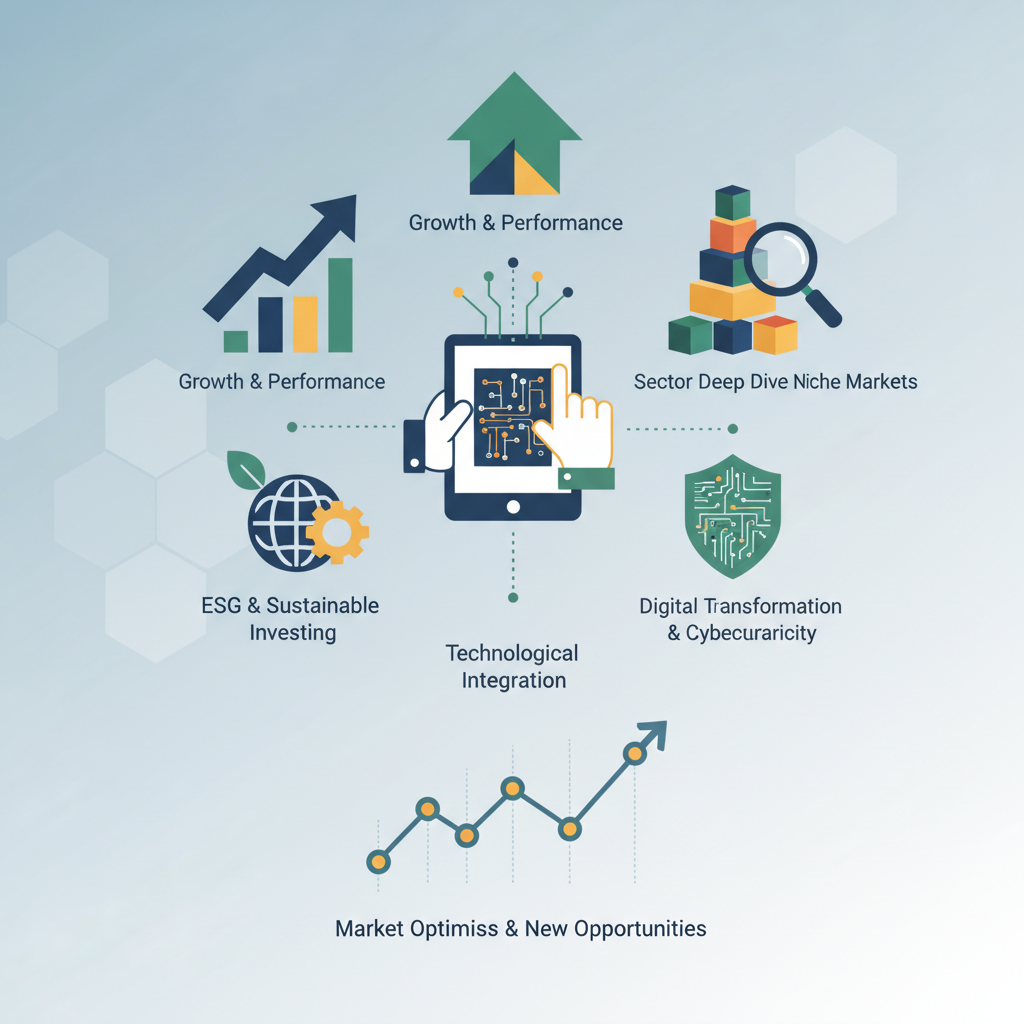
Private Equity (PE) continues to shape the global financial landscape, offering unique growth opportunities alongside complex challenges. For investors, understanding current dynamics is crucial for navigating this evolving environment. This article deciphers the major Private Equity trends of this year, providing you with the keys to optimize your investment strategies.
Key Private Equity trends for 2024 include the increasing integration of ESG criteria, the rise of the secondary market, the impact of AI on analysis and management, and an increased focus on specific sectors. Investors must adapt by diversifying, evaluating ESG, and leveraging new technologies for optimal returns and informed decision-making.
Major Private Equity Trends for this Year
Private Equity is a vital economic driver, financing unlisted companies and stimulating innovation. As an investor, your success depends on your ability to anticipate and adapt to market changes. Let's delve into the Private Equity trends that will define the year.
1. Systematic Integration of ESG Criteria in Investment
Long considered secondary, Environmental, Social, and Governance (ESG) criteria are now at the heart of Private Equity strategies. This trend is not a mere fad but a necessity dictated by regulation, investor preferences, and the growing conviction that sustainable companies are more resilient.
Why is ESG Crucial for Private Equity?
ESG investing not only mitigates regulatory and reputational risks but also identifies long-term growth opportunities. Companies with strong ESG performance attract more talent, innovate faster, and enjoy greater social acceptance. For Private Equity funds, this translates into potentially higher valuations and more stable returns on investment.
- Risk reduction: Fewer penalties, better brand image.
- Value creation: Improved operational efficiency, capital attraction.
- LP requirements: Limited Partners (final investors) increasingly demand ESG portfolios.
2. The Private Equity Secondary Market in Full Expansion
The Private Equity secondary market is experiencing exponential growth. Once reserved for institutional players, it is now opening up to a wider range of investors seeking to optimize their portfolio liquidity or access mature assets.
Advantages of the Secondary Market
Acquiring stakes in existing funds or portfolios of unlisted assets offers several advantages:
- Increased liquidity: Possibility of reselling interests before the fund's maturity.
- Access to mature funds: Investing in funds at an advanced stage, with clearer visibility on performance.
- Diversification: Opportunity to gain exposure to specific strategies or sectors.
- Potential discount: Acquisition at discounts compared to Net Asset Value.
3. Artificial Intelligence (AI) and Data Analysis
AI and Big Data are revolutionizing how Private Equity funds identify, evaluate, and manage their investments. They offer unprecedented analytical capabilities to detect trends, assess risks, and optimize the performance of portfolio companies.
Operational Transformation through AI
- Opportunity identification: Analysis of vast datasets to unearth promising acquisition targets.
- Enhanced due diligence: Faster and more accurate assessment of risks and growth potential.
- Portfolio optimization: Use of AI to improve operational efficiency and exit strategies for held companies.
- Market forecasting: Predictive modeling to anticipate sectoral and economic dynamics.
4. An Increased Focus on Specific and Niche Sectors
Faced with intense competition and high valuations in certain sectors, Private Equity funds are directing their capital towards niche markets or sectors with high untapped growth potential.
Promising Sectors to Watch
- Green technologies and renewable energies: Driven by climate urgency and government incentives.
- Healthcare and biotechnology: Accelerated by innovation and demographic challenges.
- Cybersecurity: Essential in an increasingly digitized world.
- Enterprise software (SaaS): Resilience and continued growth potential.
5. The Rise of Co-investments and Strategic Partnerships
To mutualize risks, access larger operations, or benefit from complementary expertise, co-investments and strategic partnerships are gaining popularity.
Advantages of Co-investment
- Risk diversification: Sharing the investment among several actors.
- Access to larger deals: Possibility to participate in larger-sized transactions.
- Sharing expertise: Benefiting from the experience and networks of other investors.
- Alignment of interests: Collaborative work to maximize value.
| Criterion | Advantage | Level |
|---|---|---|
| ESG | Risk reduction, + value | High |
| Secondary Market | Liquidity, mature | Medium |
| AI/Data | Optimization, discovery | High |
| Niche Sectors | Growth, less competition | Medium |
| Co-invest. | Shared risk, expertise | High |
- Ignore ESG: Failing to consider ESG criteria can lead to asset write-downs and isolation from responsible investors. This is a costly mistake in the long run.
- Neglect the secondary market: Missing out on opportunities offered by this growing market can limit the liquidity and diversification of your portfolio.
- Underestimate AI: Not integrating AI into due diligence and portfolio management means depriving oneself of powerful tools to improve decision-making and performance.
- Lack of sectoral diversification: Concentrating all investments in a single sector can expose to significant specific risks in the event of a market downturn.
- Evaluate your current portfolio: Analyze the ESG compliance of your existing assets and identify gaps.
- Seek opportunities in the secondary market: Contact specialized brokers to explore offerings matching your criteria.
- Train on AI analysis tools: Invest in knowledge of platforms and algorithms to improve target evaluation.
- Diversify geographically and sectorally: Explore emerging markets and niche sectors with high growth potential to balance risks and returns.
- PwC | https://www.pwc.com/gx/en/private-equity/private-equity-report-2024.html
- Bain & Company | https://www.bain.com/insights/private-equity-global-market-update-2024/
- EY | https://www.ey.com/en_gl/private-equity/how-do-pe-firms-need-to-evolve-to-stay-relevant
What is ESG investing in Private Equity? ESG (Environmental, Social, and Governance) investing in Private Equity integrates sustainability and social responsibility criteria into the process of selecting, managing, and exiting investments, aiming to generate long-term financial and societal value. Why is the Private Equity secondary market important for an investor? The secondary market offers investors (Limited Partners) the opportunity to resell or acquire stakes in existing Private Equity funds, improving the liquidity of their portfolios, enabling diversification, and providing access to funds at a more advanced stage of maturity. How is AI used in Private Equity? AI is used for massive data analysis to identify investment opportunities, improve due diligence, optimize the management of portfolio companies (operational efficiency, exit strategies), and predict market trends.