In an ever-evolving financial world, anticipating trends and building a balanced investment portfolio for 2026 is crucial for any investor. This article guides you through the essential strategies to optimize your investments, manage risks, and ensure the growth of your wealth over the long term. Prepare to make informed decisions to achieve your financial goals post-2025.
For 2026, a balanced investment portfolio should prioritize asset diversification, active risk management, and a strategic allocation between traditional and emerging assets to optimize return and financial security.
1. Defining Your Balanced Investment Portfolio 2026
A balanced investment portfolio for 2026 is not a one-size-fits-all formula, but a personalized construction based on your objectives, investment horizon, and risk tolerance. The year 2026 is expected to present specific challenges and opportunities, particularly inflation, technological changes, and geopolitical developments. Building such a portfolio means anticipating these factors.
Understanding your objectives and risk tolerance
First and foremost, it is imperative to clearly define your financial aspirations. Is this a short-term project (less than 3 years), medium-term (3 to 10 years), or long-term (more than 10 years)? Your risk tolerance, meaning your capacity and willingness to accept value fluctuations in exchange for potentially higher returns, will also determine the ideal composition of your balanced portfolio.
2. Asset Allocation 2026: Key to Performance and Security
Asset allocation 2026 is arguably the most important decision for your portfolio's performance. It involves dividing your investments among different asset classes such as stocks, bonds, real estate, commodities, and alternative assets. The goal is to find the right balance that maximizes returns while minimizing risks.
Diversification strategies and macroeconomic trends
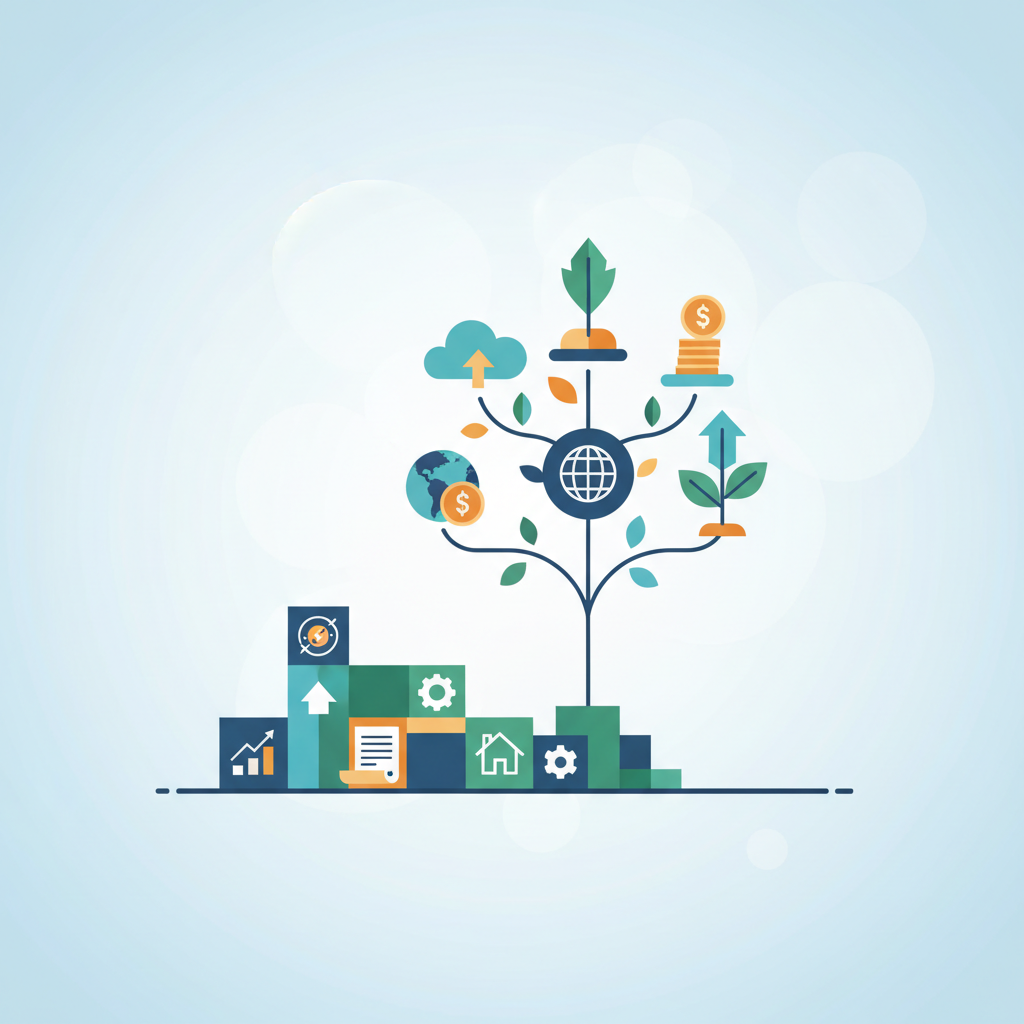
For 2026, it is wise to consider diversification not only by asset class but also geographically and sector-wise. Emerging markets could offer interesting growth opportunities, while certain sectors like sustainable technology or healthcare will remain dynamic. A well-thought-out wealth diversification 2026 is your best defense against market unpredictability.
3. Financial Risk Management: Protecting Your Capital
Financial risk management is intrinsic to building a balanced investment portfolio for 2026. It does not consist of avoiding all risks, but of identifying, measuring, and mitigating them. A resilient portfolio is one that can withstand economic turbulence without compromising your long-term objectives.
Tools and techniques for minimizing losses
- Diversification: Don't put all your eggs in one basket.
- Regular rebalancing: Periodically adjust your portfolio's composition to return to your target asset allocation.
- Fundamental analysis: Invest in companies or assets with solid fundamentals.
- Use of stop-loss orders: Limit your potential losses on specific positions.
4. Secure Investments 2026: Stability and Return
Although a balanced portfolio involves some risk-taking, secure investments 2026 play a crucial role in providing stability and liquidity. They act as a cushion during periods of volatility and can represent a significant portion of your portfolio depending on your profile.
Low-risk investment options
- Money market funds: Offer high liquidity and very low risk.
- Government bonds: Particularly those from stable governments.
- Euro-denominated life insurance contracts: Offer capital guarantees.
- Term deposits: Lock in funds for a given period in exchange for a guaranteed interest rate.
5. Optimizing Wealth Diversification 2026
Effective wealth diversification 2026 goes beyond traditional financial assets. It also encompasses real estate, commodities, and other alternative assets that may have a low, or even negative, correlation with stock markets, which helps smooth returns.
Alternative assets and thematic investments
- Real Estate: Via direct investment, SCPIs (French property investment companies) or REITs.
- Commodities: Gold, silver, via ETFs or direct purchase.
- Private Equity and Venture Capital: Access to unlisted companies (for sophisticated investors).
- Responsible Investments (ESG): Align your values with your investments, with potential for sustainable performance.
6. Rebalancing and Monitoring: Maintaining Your Portfolio
A balanced investment portfolio for 2026 is not static. Market conditions change, and your objectives evolve. Regular monitoring and periodic adjustments through rebalancing are essential to maintain the desired asset allocation and financial risk management at an acceptable level.
When and how to rebalance?
Rebalancing can be done temporally (e.g., once a year) or by threshold (e.g., if an asset class deviates by more than X% from its target weight). This involves selling outperforming assets and buying underperforming ones to return to your initial allocation. This discipline forces you to sell high and buy low.
| Criterion | Advantage | Level |
|---|---|---|
| Diversification | Reduction of overall risk | High |
| Liquidity | Quick access to funds | Variable |
| Return Potential | Capital growth | Medium to high |
| Stability | Capital protection | Medium |
| Risk management | Loss mitigation | Crucial |
- Frequent mistake 1 to absolutely avoid: Ignoring your risk tolerance. Investing too aggressively or too cautiously relative to one's profile often leads to panic or underperformance.
- Frequent mistake 2 and why: Not diversifying enough. Placing all funds in a single asset type or a single sector excessively exposes the portfolio to specific shocks.
- Frequent mistake 3 with consequences: Reacting emotionally to market fluctuations. Selling during downturns or buying during frenzied upturns destroys long-term value.
- Clearly define your financial objectives for the next 3, 5, and 10 years.
- Honestly assess your risk tolerance, alone or with a financial advisor.
- Build an initial asset allocation, including traditional and a portion of alternative assets.
- Plan an annual rebalancing of your balanced investment portfolio 2026.
- French Financial Markets Authority (AMF) | https://www.amf-france.org/
- Banque de France (Bank of France) | https://www.banque-france.fr/
- Institute for Real Estate and Property Savings (IEIF) | https://www.ieif.fr/
What is a good asset allocation for 2026? The "ideal" allocation depends on your profile. A common approach is to use 100 minus your age to determine the percentage of equities. However, for 2026, broader diversification into alternative assets and increased consideration of ESG factors are recommended. How does financial risk management affect my balanced investment portfolio 2026? Good risk management aims to maximize return per unit of risk taken. It allows you to build a resilient portfolio capable of navigating different market phases with less volatility and protecting your capital. Are secure investments 2026 still relevant with inflation? Yes, they remain relevant for stability, liquidity, and diversification. Even if inflation can erode some of their real return, their role as a "cushion" is essential in a balanced investment portfolio, especially during periods of high uncertainty.