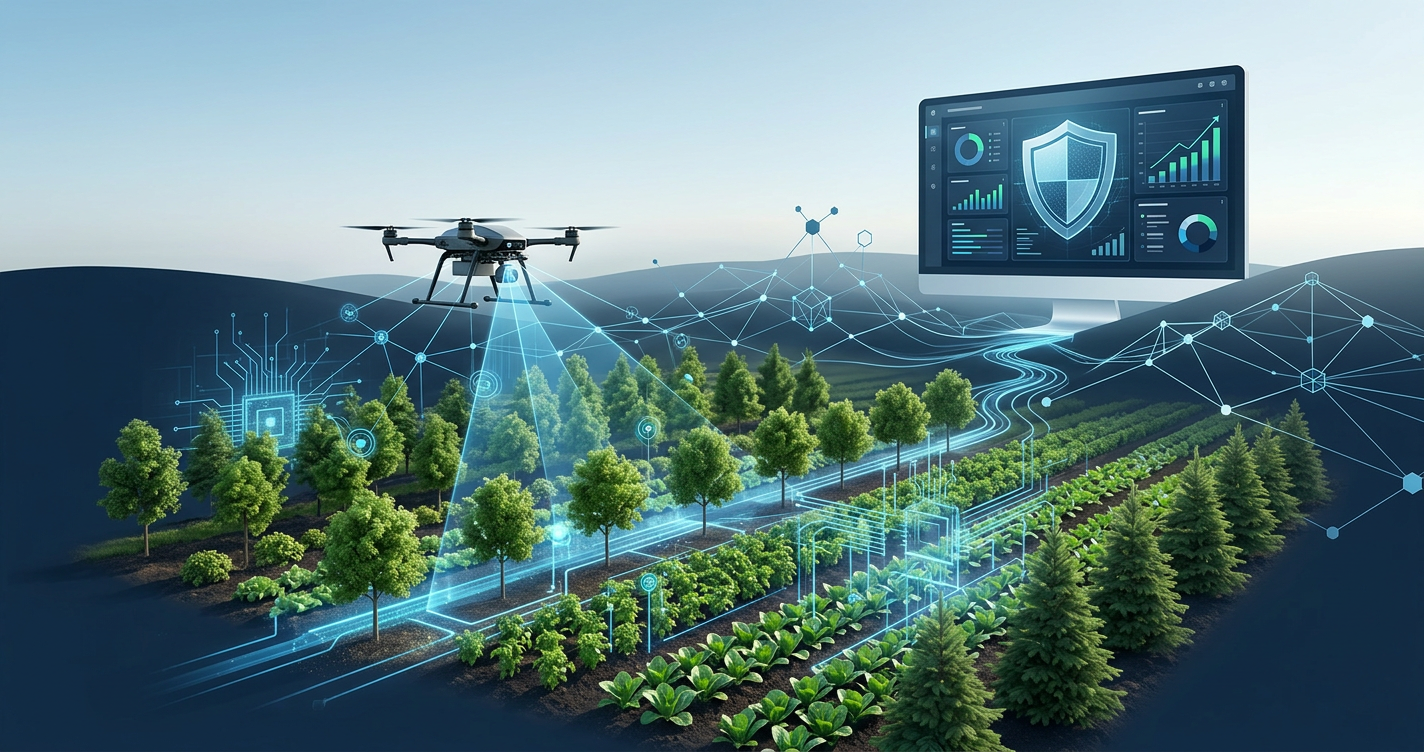
The investment sector is evolving, and agroforestry is positioning itself as a pillar of this transformation. In 2026, the integration of Artificial Intelligence (AI) does not merely optimize agriculture; it reinvents the management of land assets, offering unprecedented opportunities for savvy investors seeking to combine financial returns with sustainable impact.
Agroforestry Investment 2026, boosted by AI, represents a key strategy for stable returns and a positive environmental impact. This innovative approach enables advanced soil regeneration, optimized carbon sequestration, and intelligent resource management, essential for a diversified and resilient portfolio.
Agroforestry 2026: Land Assets Reimagined by AI
1. Agroforestry: A Future Asset for Sustainable Investment
Agroforestry involves combining trees with agricultural crops or livestock on the same plot, thereby creating a more resilient and productive ecosystem. This model is no longer a niche but an essential component of sustainable investment. In Europe, the demand for more environmentally friendly agricultural practices is intensifying, driven by public policies and collective awareness.
The Rise of Agroforestry in Europe
The deployment potential of agroforestry in Europe is considerable. According to the FAO, Europe could see a significant increase in global agroforestry areas in the coming decades. Investments in this domain have doubled over the last five years, attracting capital seeking to generate both financial and environmental returns. Projects range from soil regeneration to optimization of water resources, transforming marginal lands into productive, high-value assets. To learn more about our innovative approaches, discover our alternative investment offerings.
2. The Transformative Role of AI in Modern Agroforestry
The integration of Artificial Intelligence marks a technological breakthrough for Agroforestry Investment 2026. AI is not just a data collection tool; it is a driver of predictive optimization and dynamic management.
Optimizing Yields and Sustainability through AI
- Predictive Soil Analysis: AI algorithms analyze thousands of data points (humidity, nutrients, pH, climate history) to optimize species selection and cultivation methods. This minimizes risks and maximizes long-term productivity.
- Intelligent Water Management: Connected sensors and AI enable precision irrigation, reducing water consumption by 20 to 30% compared to traditional methods, crucial in the context of climate change.
- Drone and Satellite Monitoring: AI interprets aerial images to detect diseases, nutritional deficiencies, or insect invasions early, allowing for targeted and rapid interventions, thereby reducing crop losses and the need for large-scale treatments.
- Carbon Farming Optimization: AI plays a central role in the measurement, verification, and certification of carbon sequestration. By precisely quantifying the amount of CO2 absorbed by agroforestry systems, it facilitates the valuation of carbon credits, adding a new revenue stream for investors. This is particularly relevant for Carbon Farming 2026.
3. Soil Regeneration Europe: An Economic and Ecological Challenge
Soil regeneration in Europe is more than an ecological necessity; it is an economic imperative. Healthy soils are the foundation of resilient and productive agriculture. Agroforestry, assisted by AI, is a major solution.
Benefits of Soil Regeneration
By restoring microbial biodiversity and organic matter in soils, agroforestry improves soil structure, water retention capacity, and natural fertility. This translates into a reduction in the need for chemical inputs (fertilizers, pesticides) and better resistance to climate hazards. Recent studies show that the value of regenerated land can increase by 10 to 15% in five years, offering an additional return for investors in sustainable asset management.
4. Investment Strategies in AI-Assisted Agroforestry
Investing in Agroforestry Investment 2026 requires a well-defined strategy. At Alpha Invest & Securities, we target projects with high growth and impact potential.
Opportunities for Investors
- Thematic Funds: Participation in specialized funds for the acquisition and management of agroforestry lands, often with objectives of carbon sequestration and local development.
- Private Equity Co-investment: Support for innovative agricultural projects integrating AI to maximize productivity and sustainability. These private co-investment opportunities can generate significant returns.
- Direct Acquisition and Active Management: For investors with an appetite for more direct control, the acquisition of plots and the implementation of AI-optimized agroforestry systems. Our experts are AMF-accredited and have over 15 years of experience in asset management, with a portfolio of over 500 million euros under management. Our Expert Investment Team supports you at every step.
5. Carbon Farming 2026: A New Revenue Stream
Carbon Farming 2026 is a strong trend, where agricultural practices contributing to CO2 sequestration are remunerated. Agroforestry is a champion in this field.
Valuation of Carbon Credits
Agroforestry projects generate measurable and verifiable carbon credits, which can be sold on voluntary or regulated markets. This new revenue stream not only improves project profitability but also contributes to the fight against climate change, attracting socially responsible capital. AI facilitates the certification and monitoring of these commitments.
6. Agriculture 4.0 and the Modern Investor
Agriculture 4.0 is the convergence of digital technologies – AI, IoT, big data, robotics – with agricultural practices. For the modern investor, this means more resilient, more efficient, and more transparent assets. Agroforestry Investment 2026 is at the forefront of this revolution.
Transparency and Impact Measurement
Agriculture 4.0 Alpha technologies enable complete traceability, from forest to final product, and a precise evaluation of environmental and social impact. This transparency is increasingly valued by institutional and private investors concerned with ESG (Environmental, Social, Governance).
| Criterion | Advantage of AI Agroforestry | Potential Return Level |
|---|---|---|
| Soil Regeneration | Improved natural fertilization | High |
| Carbon Sequestration | Verifiable carbon credit generation | Moderate to High |
| Climate Resilience | Diversification of revenues, cultural protection | High |
| Resource Management | Reduction of inputs (water, fertilizers) | High |
| Asset Valuation | Increase in land value | High |
- Ignoring the initial planning phase: Insufficient analysis of soil, climate, and local species can compromise project success and long-term returns. AI-assisted planning minimizes these risks.
- Underestimating technological contribution: Investing in agroforestry without integrating AI and data analytics tools means foregoing major optimization of productivity and sustainability.
- Neglecting regulatory incentives: Not staying informed about available subsidies and carbon credits in Europe represents a loss of financial potential for your Agroforestry Investment 2026.
- Evaluate your current portfolio: Identify diversification opportunities towards sustainable land investment.
- Learn about AI technologies applied to agroforestry: Understand how these innovations can maximize your returns and impact.
- Contact Alpha Invest & Securities: Schedule an appointment to discuss our alternative investment strategies in agroforestry and Agriculture 4.0 Alpha.
- Develop a personalized investment plan to capitalize on the growth of Agroforestry Investment 2026 in Europe.
- Food and Agriculture Organization of the United Nations (FAO) | https://www.fao.org
- European Commission | https://ec.europa.eu
What makes agroforestry an attractive investment in 2026? Agroforestry offers asset diversification, stable returns, additional income through carbon farming, and a strong ESG impact, all optimized by AI. How does AI improve the profitability of agroforestry? AI optimizes returns through predictive analysis, precision resource management (water, nutrients), early problem detection, and carbon credit valuation, reducing risks and costs. What are the risks associated with investing in agroforestry? Risks include climate hazards, fluctuations in agricultural commodity prices, and management complexity. However, a robust strategy and the integration of AI can significantly mitigate these risks.
✨ Written with SEO Magic AI — Automated SEO Content Generation