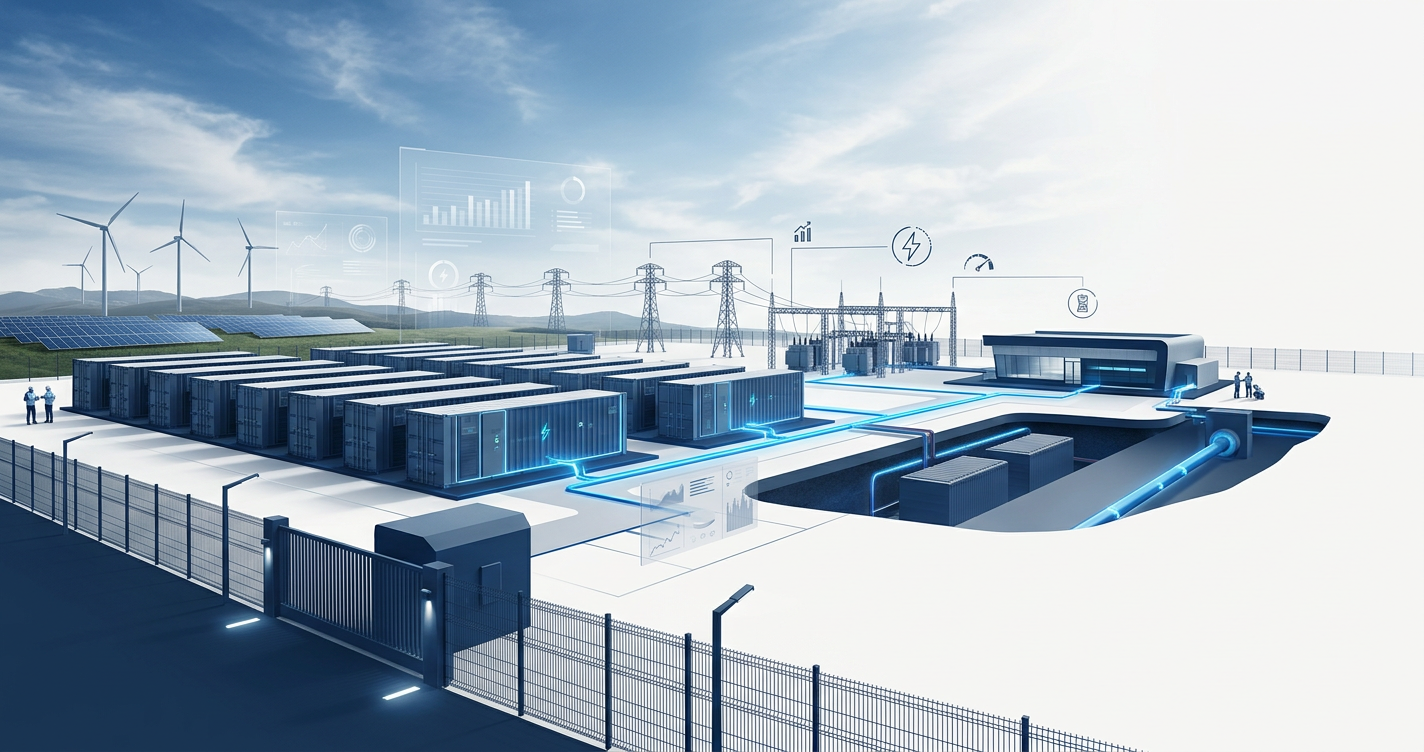
The imperative for a successful energy transition in Europe is inseparable from a major advance in the field of long-duration energy storage. As the European Union aims for carbon neutrality by 2050, the variability of renewable energies such as solar and wind poses a significant challenge. Energy Storage 2026 is the cornerstone for ensuring the stability, independence, and resilience of the European electricity grid.
Long-duration Energy Storage is crucial for the decarbonization and electrical sovereignty of the EU. Investments in solid-state Batteries 2026, thermal storage, and CleanTech Europe 2026 are essential to stabilize grids and secure supply in the face of intermittent renewable energies.
1. The Strategic Importance of Long-Duration Energy Storage
Europe's energy dependence, particularly on fossil fuels, represents a major geopolitical and economic risk. The ambition to achieve electrical sovereignty, powered by renewable sources, runs up against their inherent intermittency. This is where Long-Duration Energy Storage comes in. It allows excess production to be captured during favorable periods (wind, sun) and returned during peak demand or low production periods. According to the International Energy Agency (IEA), global storage capacities are expected to triple by 2030, highlighting the urgency and opportunity.
Why Long-Duration is Different
Short-term storage solutions, such as lithium-ion batteries, are effective for managing daily flexibility. However, long-duration energy storage (more than 6-8 hours to several days) is essential for prolonged periods of low renewable production. It is a critical component for total grid resilience, enabling, for example, the navigation of "dark dunks" (periods without wind or sun) or winter consumption peaks.
2. Technological Innovations: Drivers of Change
The energy storage sector is experiencing a technological boom, with decisive advances transforming the energy landscape.
Solid-State Batteries 2026: The Revolution Underway
Solid-state Batteries 2026 represent a major breakthrough. Unlike liquid lithium-ion batteries, they use a solid electrolyte, offering considerable advantages:
- Increased safety: Significant reduction in fire risks.
- Higher energy density: Potentially 2 to 3 times higher, allowing for more compact and efficient storage.
- Extended lifespan: Better resistance to repeated cycling. Investment in research and development of these technologies is crucial for their mass adoption. Some experts predict significant commercial maturity of solid-state batteries for specific applications by 2026-2027.
Beyond Batteries: Thermal Storage and Green Hydrogen
"Thermal storage investment" is another promising avenue. This involves converting surplus electricity into heat stored in specific materials, then converting it back into electricity when needed. Pilot projects in Europe are already demonstrating the feasibility and effectiveness of these systems for storage durations of up to several days. In parallel, green hydrogen is a very long-duration storage solution. Produced by electrolysis of water using renewable energies, it can be stored and converted back into electricity, used as fuel, or an industrial raw material. The European hydrogen initiative aims to deploy 40 GW of electrolyzers by 2030, a colossal investment that will shape the continent's energy future. For investors, these areas offer exceptional opportunities, particularly with initiatives such as European Hydrogen Infrastructure 2026.
3. The Energy Storage Market in Europe: Exponential Growth
The European energy storage market is booming. EU decarbonization policies and incentives for renewable energy adoption are massively stimulating demand. According to the latest analyses, the energy storage market in Europe is expected to reach a cumulative capacity of 100 GW by 2030, compared to approximately 30 GW in 2023. This growth is driven by:
- Increased integration of renewable energies.
- The need to stabilize the grid.
- The deployment of large-scale flexibility solutions. CleanTech Europe 2026 are at the heart of this dynamic, attracting significant capital. Alpha Invest & Securities closely monitors these trends to identify the best opportunities.
4. Investment Opportunities and Expected Returns
Investing in energy storage offers attractive return potential for savvy investors. Players positioning themselves today in this emerging sector benefit from a first-mover advantage. We identify several key segments for investors:
- Development of innovative technologies: Funding startups in solid-state batteries, thermal accumulators, or hydrogen solutions.
- Infrastructure projects: Direct investment in the construction and operation of large-scale storage facilities.
- Specialized funds: Investment vehicles dedicated to CleanTech Europe 2026 and energy. To explore these avenues, we invite you to discover our alternative investment offerings where private equity plays a crucial role.
5. Challenges and Strategies for True Electrical Sovereignty
Despite advancements, challenges remain:
- High initial cost: Although costs are decreasing, the initial investment remains substantial.
- Regulation and incentives: A stable regulatory framework and clear fiscal incentives are necessary to accelerate deployment.
- Grid integration: Harmonization and modernization of infrastructure are essential to manage the influx of new storage capacities. A coordinated European strategy, supported by massive investments in R&D and infrastructure, is indispensable. The EU has the technical and financial capacity to become a global leader in energy storage, thereby ensuring its electrical sovereignty for decades to come.
| Criterion | Advantage of Long-Duration Storage | Impact Level on EU |
|---|---|---|
| Grid Stability | Smooths out renewable energy intermittency | Strong |
| Energy Independence | Reduces fossil fuel dependence | Very Strong |
| Energy Cost | Production optimization | Moderate to Strong |
| Technological Innovation | New markets and jobs | Strong |
- Do not diversify storage technologies: Focusing on a single solution (e.g., lithium-ion) is a risk given technological developments and material supply.
- Neglect the regulatory aspect: The absence of clear frameworks can hinder investment and rapid deployment.
- Underestimate the need for long-duration storage: Short-duration solutions will not be sufficient to ensure complete electrical sovereignty during prolonged periods of low renewable production.
- Evaluate your current portfolio against opportunities in clean energy.
- Contact an expert in alternative investment for a personalized analysis of opportunities in energy storage.
- Stay informed about new technologies such as solid-state batteries 2026 and green hydrogen.
- Participate in specialized investment funds focusing on CleanTech Europe 2026 for direct impact and return potential.
- International Energy Agency (IEA) | https://www.iea.org/
- European Commission | https://ec.europa.eu/
- European Association for Storage of Energy (EASE) | https://ease-storage.eu/
Why is energy storage so important for the EU? Storage is crucial for integrating intermittent renewable energies, stabilizing the electricity grid, and reducing the EU's dependence on fossil fuels, thereby ensuring security of supply and energy sovereignty. What are the most promising long-duration energy storage technologies in 2026? Solid-state Batteries 2026 for their energy density and safety, thermal storage for its potentially low costs and flexibility, and green hydrogen for its very long-term storage capacity and multifunctional potential. What are the risks associated with investing in energy storage? Risks include technological maturity (especially for emerging solutions), volatility of raw material prices, delays in infrastructure project development, and changes in the regulatory framework. Thorough due diligence and partnership with experts are essential.
✨ Written with SEO Magic AI — Automated SEO Content Generation