The financial landscape is evolving at a breakneck pace. At the heart of this transformation is Artificial Intelligence (AI), which promises to redefine how we approach investment. The question is no longer if AI will be present, but how far it will go. This article explores the future of AI investment and the possibility of 100% AI-driven management, disentangling promises from challenges for savvy investors.
The future of AI investment is promising, with AI capable of optimizing portfolios, analyzing risks, and personalizing strategies. While 100% autonomous management is technically conceivable, human prudence and regulation will remain essential for an optimal balance between efficiency and security for investors.
The Future of AI Investment: Towards 100% Driven Management?
AI is no longer just a technological trend; it is a transformative force reshaping all sectors, including finance. For investors, understanding its impact is crucial for navigating this new AI financial age.
1. AI at the Heart of Future Finance: Current Overview
AI has already deeply integrated into the financial ecosystem. Sophisticated algorithms are transforming traditional investment processes. Gone are the days of purely manual analyses; now, there's total automation of certain tedious tasks.
Role of AI in Portfolio Optimization
Today, AI excels at analyzing vast datasets to identify patterns and opportunities that the human eye would miss.
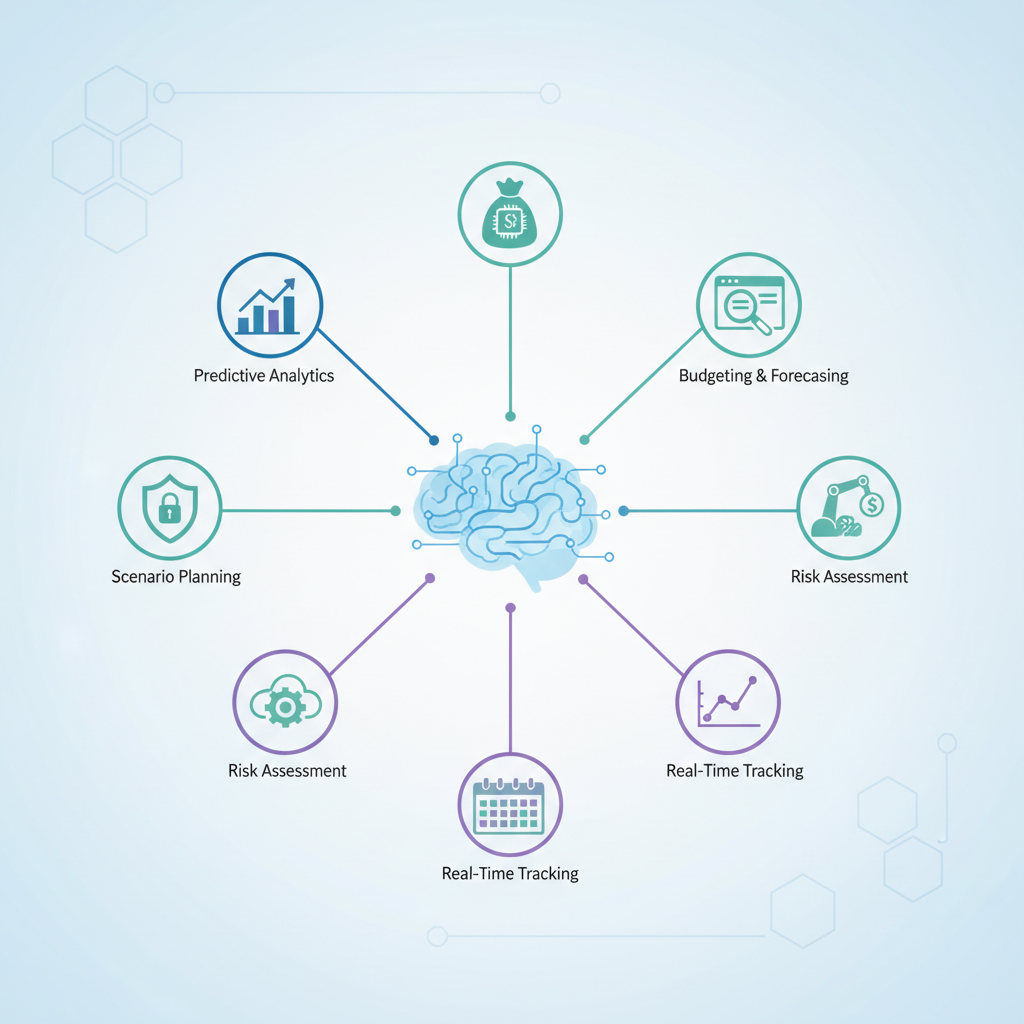
- Risk management: AI can predict potentially risky market movements with increased accuracy.
- Asset allocation optimization: Algorithms constantly adjust asset distribution according to objectives and risk tolerance.
- Algorithmic trading: Trading robots execute transactions at unparalleled speeds, capitalizing on micro-opportunities. These advancements lay the groundwork for an increasingly sophisticated future of AI investment.
2. The Potential of Total Automation in Investment
The vision of 100% AI-driven management raises fascinating questions. Total automation promises unprecedented efficiency and responsiveness, but also ethical and regulatory challenges.
Scenarios of Autonomous Investment
Imagine a portfolio that adapts itself to global events in real-time, without any human intervention.
- Advanced predictive analysis: AI could anticipate economic crises or speculative bubbles with unparalleled precision, integrating macroeconomic, geopolitical factors, and even social sentiment analysis.
- Hyper-adaptive personalization: Investment strategies could be adjusted not only to financial goals but also to changes in an investor's life (marriage, children, retirement) proactively. AI could thus make financial autonomy more accessible and robust.
3. Challenges and Limitations of 100% AI Management
Despite the promises, enthusiasm must be tempered by a realistic analysis of obstacles. Total automation presents inherent risks.
The Pitfalls of Algorithms and Market Volatility
- Black swan events: AI, based on past data, may struggle to react to unpredictable and unprecedented events.
- Algorithmic biases: If training data is biased, AI decisions will also be biased, potentially leading to systematic errors.
- Crises of confidence: In the event of a major failure of an AI system, investor confidence could be permanently shaken. The resilience of AI systems is crucial.
4. AI Fintech Trends 2030: Beyond Robo-Advisors
Current robo-advisors are just the tip of the iceberg. Fintech trends 2030 show a convergence of AI with other emerging technologies.
Integration of AI with Other Technologies
- Blockchain: AI could manage portfolios of digital assets on blockchain, bringing transparency and efficiency.
- IoT: Real-time data from the Internet of Things (IoT) could feed AI predictive models, offering an even more granular view of the economy.
- Augmented/Virtual Reality: Immersive interfaces could allow investors to interact with their AI-managed portfolios in entirely new ways.
5. The Indispensable Role of Humans in AI Investment
Despite the advent of AI, human expertise remains irreplaceable, particularly for oversight, strategy, and ethics.
Human-Machine Collaboration for Better Financial Autonomy
- Strategic supervision: Humans define macro objectives and risk limits; AI executes micro-management.
- Interpretation and adaptation: Only humans can interpret the nuances of unquantifiable geopolitical or social events and adjust strategies accordingly.
- Ethics and regulation: Establishing regulatory frameworks for AI investment will require deep human reflection to ensure investor protection.
| Criterion | AI Advantage | Level of Required Human Involvement |
|---|---|---|
| Data analysis | Accelerated, exhaustive, without emotional bias | Low, for algorithm supervision |
| Predictive accuracy | High on structured data | Moderate, for interpreting "black swans" |
| Market responsiveness | Instantaneous, 24/7 | Low, AI executes according to rules |
| Personalization | Hyper-adaptive and proactive | Moderate, for defining initial objectives |
| Crisis management | Limited ability to adapt to the unknown | Essential, for non-modellable decisions |
- Not understanding the limitations of AI models: AI is a tool, not an infallible crystal ball.
- Ignoring the importance of human oversight: even the most advanced systems can fail or be targeted by cyberattacks.
- Blindly trusting AI's historical performance: past performance does not guarantee future results.
- Inform yourself about available AI investment solutions and their features.
- Evaluate your own risk tolerance and financial goals to determine the relevance of AI.
- Start with hybrid solutions (human + AI) to familiarize yourself with the technology.
- Stay vigilant about regulatory developments and new fintech trends 2030 to adapt your strategy.
- PwC - Fintech Global Report 2023 | https://www.pwc.com/gx/en/industries/financial-services/assets/pwc-fintech-report-2023.pdf
- World Economic Forum - The Future of Financial Services 2023 | https://www.weforum.org/reports/the-future-of-financial-services-2023
- Deloitte - AI in Financial Services | https://www2.deloitte.com/us/en/pages/financial-services/articles/ai-in-financial-services.html
Will AI entirely replace financial advisors? No, AI will complement advisors. While AI will manage analytical and transactional aspects, human advisors will provide strategic expertise, personalized advice, and emotional support to investors. Is 100% AI-driven management secure? The security of AI systems is a major priority. While robust measures are put in place, no system is infallible. Cybersecurity will remain a constant challenge. How can an investor prepare for this future of AI investment? Investors must educate themselves on the capabilities and limitations of AI, diversify their strategies, and consider platforms that offer a balance between automation and human intervention.