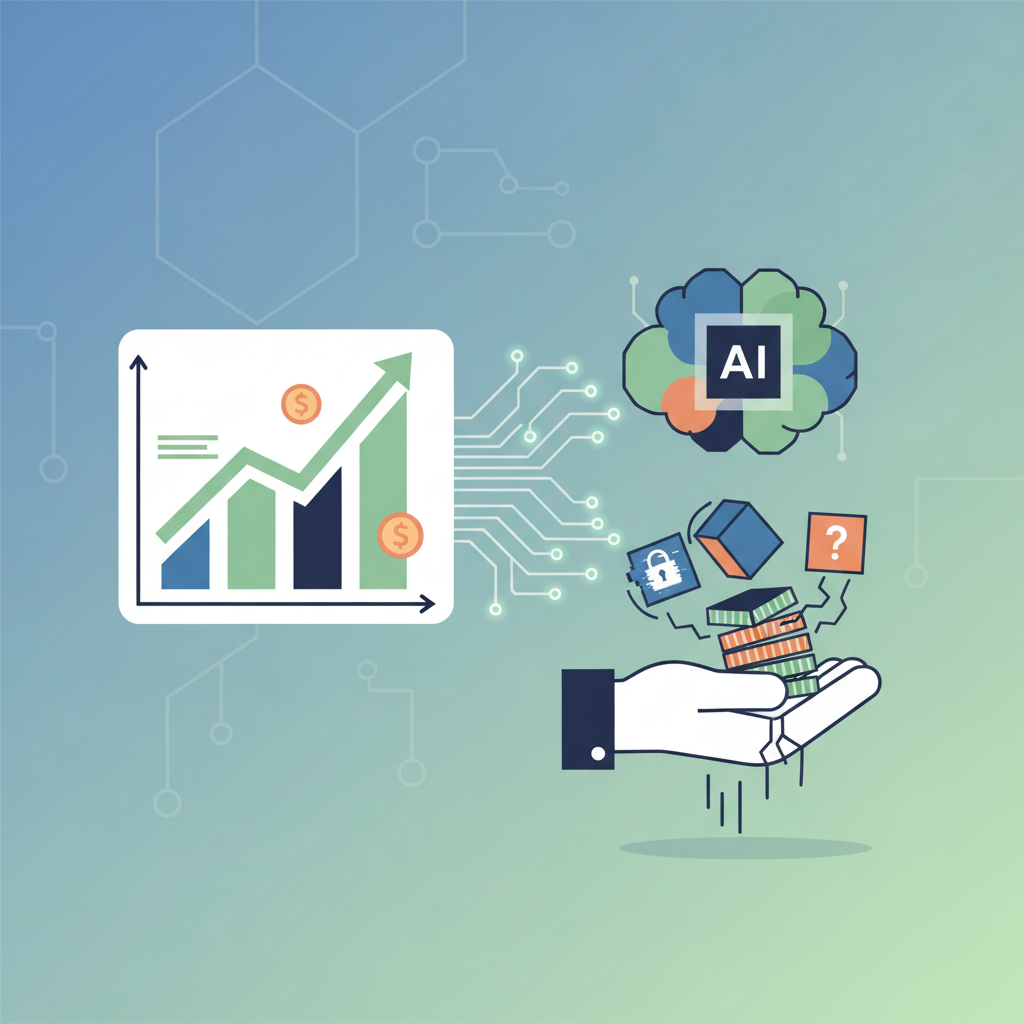
In today's financial landscape, the integration of Artificial Intelligence (AI) is radically transforming how forecasts are developed. Savvy investors are now turning to AI financial forecasting software to anticipate market trends, manage risks, and optimize their returns. This article will guide you through the 7 most effective solutions, helping you choose the ideal tool for your investment strategies.
AI financial forecasting software revolutionizes analysis for investors by automating and refining projections. They use machine learning to identify complex patterns and offer valuable insights, enabling more informed investment decisions and better risk management. Choosing the right tool is crucial to remaining competitive in today's markets.
Top 7 Best AI-Powered Financial Forecasting Software for Investors
The digital age has propelled AI to the heart of finance. AI financial forecasting tools are no longer a luxury but a necessity for investors seeking a competitive edge. They offer an unparalleled ability to process and analyze vast amounts of data, far exceeding traditional methods.
1. The AI Revolution in Financial Analysis
AI and machine learning have transformed financial analysis by enabling more accurate and faster forecasts. These technologies detect complex correlations and hidden patterns in data, offering a prospective view that human analysis alone cannot achieve. For investors, this means better anticipation of market movements and more optimized capital allocation.
The Impact on Investment Decisions
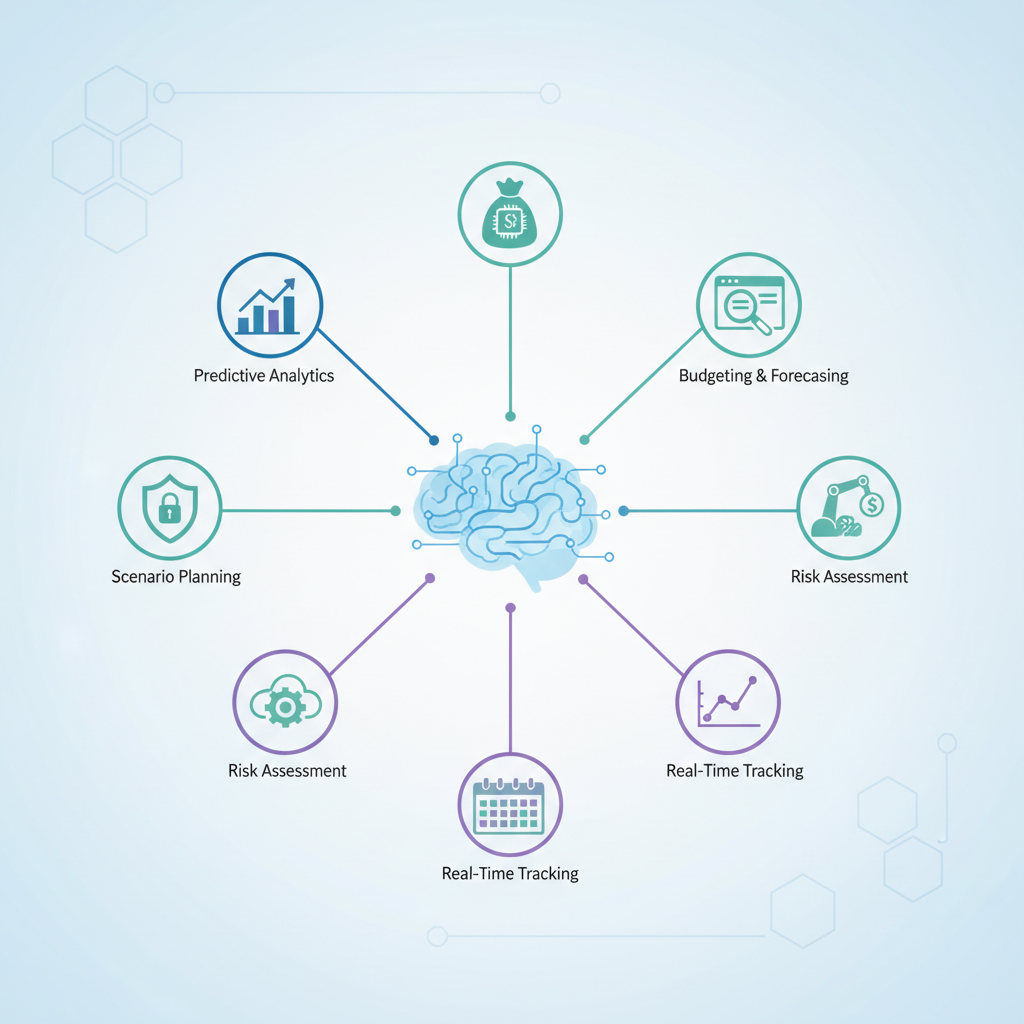
AI financial forecasting software helps to:
- Identify emerging trends and investment opportunities.
- Evaluate risks in a more granular way.
- Simulate different economic scenarios.
- Automate automated financial reporting, freeing up valuable time.
2. Essential Criteria for Choosing AI Financial Forecasting Software
Selecting the right AI finance SAAS is crucial. Several factors must be considered to ensure the tool meets an investor's specific needs.
- Forecast accuracy: The core of any good software is its ability to predict accurately.
- Ease of integration: Compatibility with AI finance ERPs and other existing systems.
- Learning capabilities: The ability of AI to improve over time with new data.
- Customization: Adaptability to financial models and user preferences.
- Scenario analysis: Forecasting the impact of different economic events.
- Cost: Evaluation of the return on investment related to the solution's price.
3. The Giants of the AI Financial Forecasting Software Market
Here is a comparison of AI financial forecasting tools from market leaders, each with its strengths:
a. Anaplan: Connected and Collaborative Planning
Anaplan is recognized for its connected enterprise planning capabilities, enabling complex financial modeling and real-time collaboration. Its AI helps optimize revenue forecasts, budgets, and profitability analyses. Ideal for companies requiring a unified strategic vision.
b. Adaptive Planning (Workday): Simplicity and Performance
Integrated with Workday, Adaptive Planning offers a complete suite for planning and analysis. Its user-friendly interface and AI functions facilitate the creation of financial models, scenario analysis, and automated financial reporting. Excellent for SMBs and large enterprises.
c. SAP Analytics Cloud (SAC): The Power of the SAP Ecosystem
SAP SAC combines analysis, planning, and forecasting in a single platform. Integrated AI, via "Smart Predict," enables automated forecasts and anomaly detection, leveraging integration with other AI finance ERP modules of SAP.
d. Oracle EPM Cloud: Integrated Solutions for Performance
Oracle EPM Cloud offers a robust suite of AI financial forecasting software, including planning, budgeting, and consolidation. Its machine learning capabilities improve forecast accuracy, particularly for large organizations with complex needs.
e. IBM Planning Analytics: Decision Intelligence
Based on TM1, IBM Planning Analytics excels in multidimensional modeling. Its AI explores data to identify trends, anomalies, and correlations, providing insights for informed financial decisions.
f. Vena Solutions: Excel at the Heart of AI
Vena Solutions stands out for its strong integration with Excel, combining the spreadsheet's flexibility with the power of an AI-driven enterprise platform. This approach facilitates the transition for teams accustomed to Excel, while benefiting from advanced forecasting and automated financial reporting capabilities.
g. BlackLine: Automation and Accuracy
Although more focused on financial close and reconciliation, BlackLine integrates AI to automate repetitive tasks and improve the accuracy of financial data. A faster and more accurate close positively impacts the quality of future forecasts.
4. Concrete Benefits of These Software for Investors
The adoption of these AI financial forecasting software brings tangible benefits:
- Reduction of human errors: Automation minimizes inaccuracies.
- Time saving: Rapid analysis allows investors to focus on strategy.
- Forward-looking vision: Better anticipation of market movements and company performance.
- Portfolio optimization: More informed and profitable investment decisions.
- Better risk management: Early identification of potential financial threats.
5. Data Integration and Security
The integration of these AI finance SAAS into the existing financial ecosystem is a key point. Most offer robust APIs to connect to AI finance ERP, CRM systems, and databases. Data security is paramount, with encryption protocols and compliance with regulatory standards (GDPR, SOC 2) to protect sensitive financial information.
6. The Future of Financial Forecasting with AI
The future of AI financial forecasting is promising. We will see increased sophistication of algorithms, better integration of unstructured data (text, social media sentiment), and even more advanced personalization of predictive models. AI financial forecasting software will become even more intuitive, democratizing access to advanced financial analysis for a wider audience of investors.
| Criterion | Anaplan | Adaptive (Workday) | SAP SAC | Oracle EPM | IBM PA | Vena | BlackLine |
|---|---|---|---|---|---|---|---|
| AI Accuracy | Very High | High | Very High | High | Very High | High | Moderate |
| ERP Integration | Excellent | Very Good | Native SAP | Native Oracle | Good | Good | Very Good |
| Ease of Use | Moderate | High | Moderate | Moderate | Moderate | High | Very High |
| Scenario Analysis | Very Strong | Strong | Very Strong | Strong | Very Strong | Strong | Limited |
| Cost (Est.) | $$$$ | $$$ | $$$$ | $$$$ | $$$ | $$ | $$$ |
- Ignoring data quality: AI is only as good as the data it analyzes. Dirty or incomplete data will lead to erroneous forecasts.
- Not understanding the underlying models: Blindly trusting AI results without understanding its mechanisms can be risky. Human validation is always required.
- Opting for a "one-size-fits-all" solution: Every investor has specific needs. The choice of AI financial forecasting software must be made based on these needs, not a generic solution.
- Evaluate your specific needs: Clearly define the objectives of your financial forecasts.
- Analyze tool capabilities: Compare functionalities, AI accuracy, and integration.
- Request demonstrations: Test AI finance SAAS with your own data if possible.
- Consider support and assistance: Ensure robust technical support for successful implementation.
- PwC Global AI Study | https://www.pwc.com/gx/en/issues/ai-robotics/pwc-ai-analysis-sizing-the-prize.html
- Gartner Market Guide for Cloud Financial Planning and Analysis Solutions | https://www.gartner.com/en/documents/4006121
- Deloitte Global Human Capital Trends | https://www2.deloitte.com/content/dam/Deloitte/us/Documents/human-capital/us-hc-2020-global-human-capital-trends.pdf
What is the difference between classic financial forecasting software and AI-based software? Classic software uses predefined statistical models, while AI financial forecasting software employs machine learning to identify and adapt to complex patterns in data, offering superior accuracy and agility in the face of market fluctuations. Can AI completely replace human financial analysts? No, AI is a powerful tool that optimizes and improves the analyst's work, but it does not replace them. Human expertise remains essential for interpreting results, evaluating non-quantifiable factors, and making strategic decisions. AI assists, it does not decide alone. How much does AI financial forecasting software usually cost? The cost varies considerably depending on features, company size, and customization level. AI finance SAAS can range from a few hundred to several thousand euros per month, often based on a subscription model and the number of users.