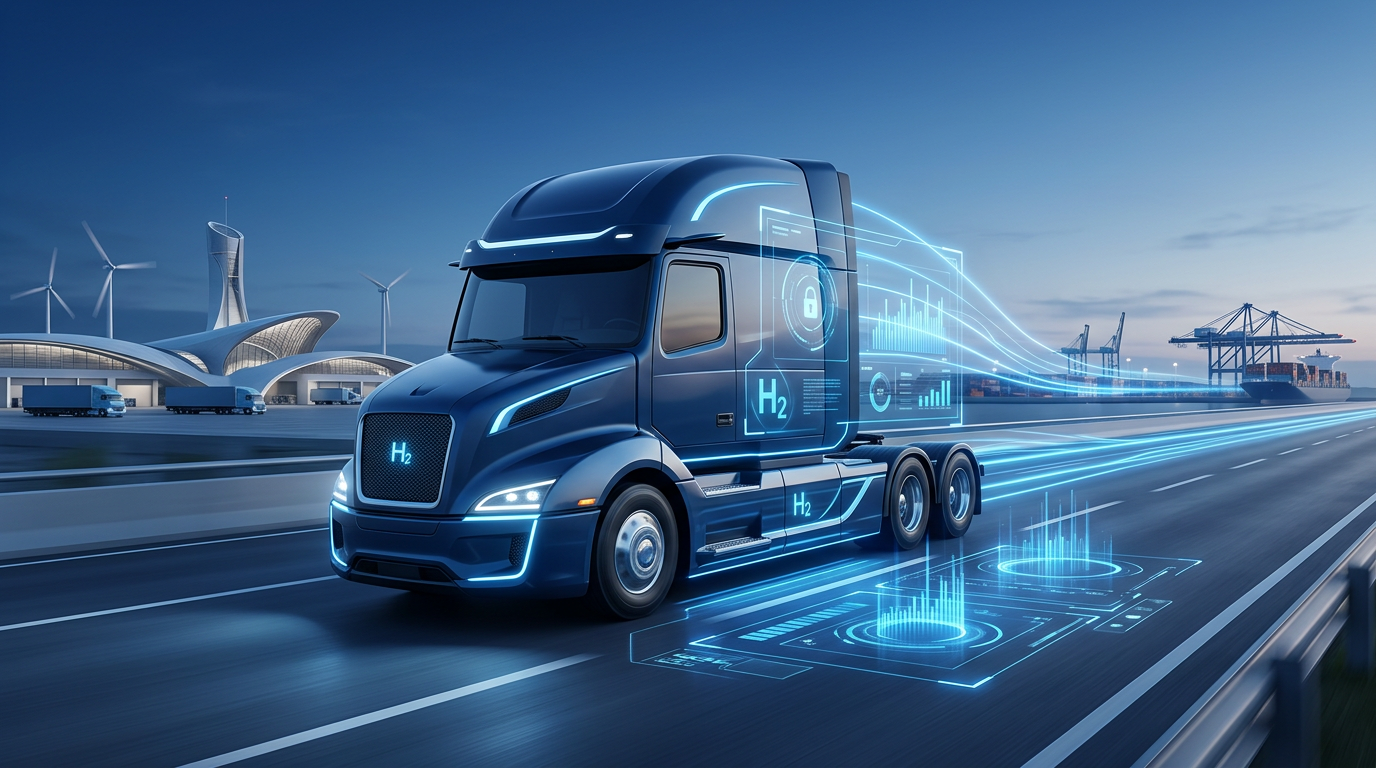
The race to decarbonize heavy-duty transport is on, and hydrogen is emerging as an indispensable solution. As an investor, understanding the potential of Hydrogen Mobility 2026 is crucial for positioning your capital in future-oriented sectors. This article deciphers the challenges and opportunities of this energy revolution.
Hydrogen Mobility 2026 represents a major investment opportunity for decarbonized heavy-duty transport, supported by public policies and technological advancements. Funds dedicated to infrastructure and fuel cells are growth drivers for green logistics, offering attractive returns for savvy investors.
1. Hydrogen, the Future Vector for Decarbonized Heavy-Duty Transport
The heavy-duty transport sector is a major contributor to greenhouse gas emissions. Faced with climate imperatives and increasingly strict regulations, hydrogen is emerging as a promising energy alternative. Unlike battery electric vehicles, hydrogen offers decisive advantages for intensive applications such as trucks, trains, or ships, particularly in terms of range and refueling time. Projections for Hydrogen Mobility 2026 are ambitious. The International Energy Agency (IEA) estimates that hydrogen could meet up to 24% of global energy needs by 2050, with a significant share for transport. This growth is fueled by massive investments in green hydrogen production, the development of more efficient fuel cells, and the deployment of refueling infrastructure.
2. Fuel Cells: The Heart of the Hydrogen Transport Revolution
Fuel cells are at the center of the hydrogen mobility ecosystem. They convert hydrogen into electricity with high efficiency, without emitting atmospheric pollutants. Technological advancements in recent years have significantly reduced costs and improved the durability of these systems. Several global companies are investing heavily in the research and development of fuel cells for hydrogen heavy-duty transport applications. A significant increase in patent filings and production capacities is observed, signaling a phase of technological maturity and accelerated commercialization. For investors, targeting leading companies in this field can prove strategic.
3. Financing H2 Infrastructure: A Strategic Challenge for 2026
The deployment of Hydrogen Mobility 2026 critically depends on the development of robust infrastructure for production, storage, and distribution. Hydrogen Refueling Stations (HRS) are vital to ensure the autonomy of heavy-duty vehicle fleets. Governments and industry recognize this imperative and are launching large-scale initiatives. H2 infrastructure funds 2026 are proliferating, specifically targeting the construction of hydrogen pipelines, electrolysis plants, and service station networks. These projects, often supported by public-private partnerships, offer long-term investment prospects with stable returns. To navigate this, it is essential to rely on alternative investment experts who analyze the viability and relevance of each project.
4. Investment Opportunities and Expected Returns
Investing in Hydrogen Mobility 2026 offers unique opportunities, especially for investors interested in green logistics alpha. Returns can come from several sources:
- Growth of companies specializing in fuel cells or hydrogen systems.
- Equity stakes in infrastructure, such as distribution networks or refueling stations, offering recurring revenue.
- Venture capital funds targeting innovative start-ups in the field.
- Private Equity 2026 co-investment in large-scale deployment projects. The hydrogen market is a future market. Analyses predict significant growth in the hydrogen market, with estimates reaching up to $300 billion by 2030. This is why many asset managers are turning to these new opportunities, as some have done for Smart Microgrids 2026.
5. Risk Management and Alpha Invest & Securities Outlook
Like any investment in emerging technologies, Hydrogen Mobility 2026 presents risks, particularly related to technological evolution, energy cost variations, and regulation. However, rigorous analysis and a diversified investment strategy can mitigate these risks. At Alpha Invest & Securities, we specialize in identifying and evaluating promising alternative investments, particularly in the energy and new technology sectors such as Agroforestry 2026. Our team of financial experts, strengthened by our AMF accreditation, supports you in navigating this complex landscape and providing access to exclusive opportunities. We emphasize a data-driven approach and rigorous selection of high-potential projects, as we do for sovereign defense 2026. To discover our alternative investment offerings and discuss your hydrogen mobility strategy, do not hesitate to contact Alpha Invest & Securities.
| Criterion | Advantage | Level |
|---|---|---|
| Market potential | Decarbonization of key sector | High |
| Return stability | Infrastructure / Long-term contracts | Moderate to high |
| Technological innovation | More efficient fuel cells | Continuous |
| Public support | Subsidies / Regulations | Strong |
- Common mistake 1: Ignoring the central role of infrastructure. Without a sufficient refueling network, the deployment of hydrogen heavy-duty vehicles will be slowed. It is crucial to invest in H2 infrastructure in parallel with vehicle development.
- Common mistake 2: Focusing solely on vehicle manufacturers. Green hydrogen production and fuel cell players also offer significant growth opportunities.
- Common mistake 3: Underestimating the importance of public policies and tax incentives, which are major catalysts for the development of the hydrogen sector.
- Assess your risk appetite for emerging technologies and alternative investments.
- Research investment funds specializing in hydrogen, particularly H2 infrastructure funds 2026.
- Schedule an appointment with one of our advisors to analyze projects presenting the best risk/return profile in hydrogen mobility.
- Position a portion of your portfolio on this underlying trend to capture the growth of heavy-duty transport decarbonization.
- International Energy Agency (IEA) | https://www.iea.org/
- Hydrogen France | https://www.france-hydrogene.org/
- Hydrogen Council | https://hydrogencouncil.com/
What is the difference between green hydrogen and gray hydrogen? Green hydrogen is produced by electrolysis of water using renewable energy (solar, wind), without CO2 emissions. Gray hydrogen is produced from fossil fuels (natural gas), generating significant CO2 emissions. Investment focuses on green hydrogen for decarbonization. Is the cost of hydrogen competitive with traditional fuels? The cost of green hydrogen is still high, but it is decreasing rapidly thanks to technological progress and increased production capacities. Subsidies and economies of scale are expected to make it competitive in the medium and long term, particularly for applications where battery electric vehicles are less suitable. What are the main challenges for Hydrogen Mobility 2026? The main challenges include scaling up green hydrogen production, deploying sufficient refueling infrastructure, and reducing the cost of fuel cells and hydrogen tanks. However, regulatory efforts and massive investments suggest these obstacles will be overcome within a few years.
✨ Written with SEO Magic AI — Automated SEO Content Generation