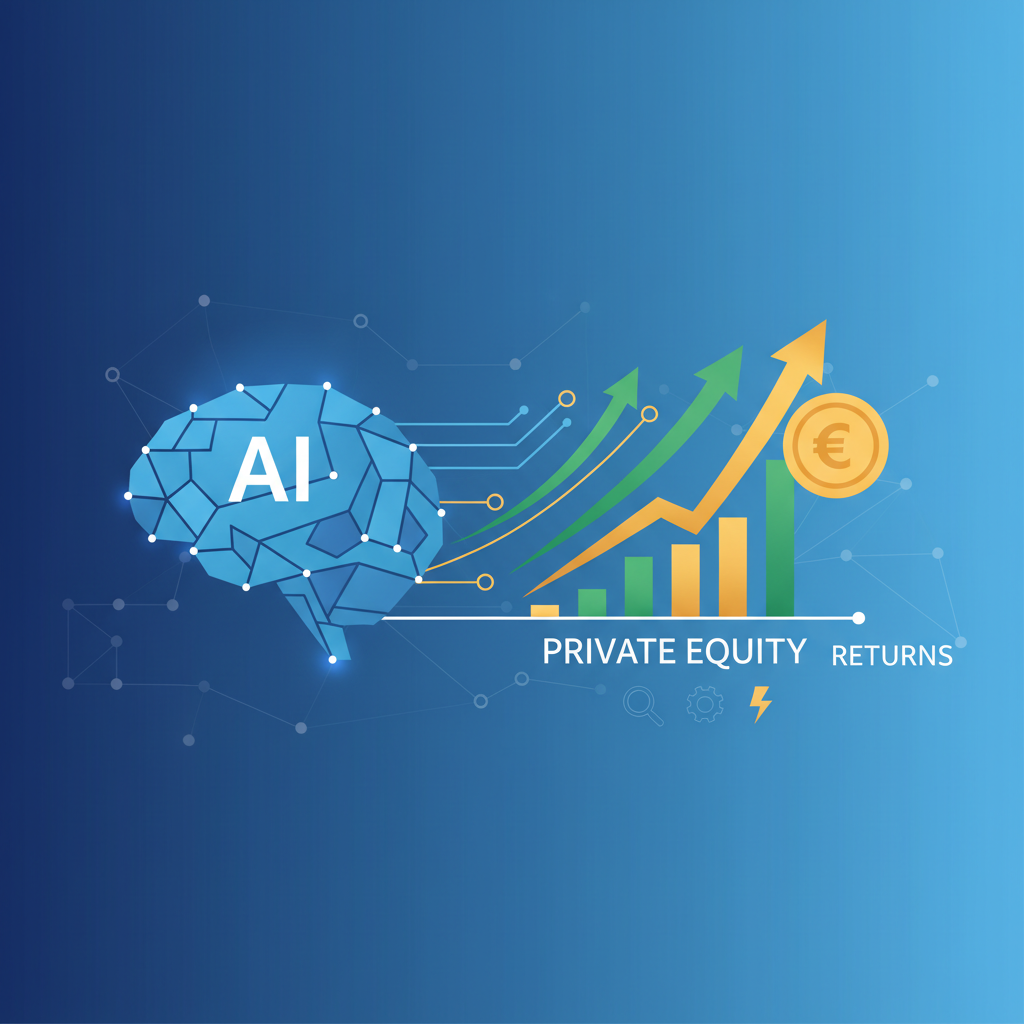
The investment world is evolving at lightning speed. At the heart of this transformation is artificial intelligence (AI), a technology that is redefining Private Equity (PE) strategies. For investors, understanding the impact of AI on Private Equity AI returns is no longer an option, but a necessity. This article decrypts how AI can maximize your returns on investment in venture capital.
AI is revolutionizing Private Equity by optimizing the identification, evaluation, and management of investments, leading to superior performance. It enables increased de-risking and potentially higher returns through data-driven decisions.
1. AI, a Growth Driver for Private Equity
Integrating artificial intelligence into the Private Equity sector is no longer a trend, but a reality that is redefining funds' room for maneuver. AI enables the analysis of massive amounts of data (Big Data) far beyond human capabilities, offering a more precise view of opportunities and risks. This predictive and prescriptive analytical capability is crucial for optimizing every stage of an investment's lifecycle.
Target Identification: A Data-Driven Approach
Traditionally, the search for investment targets relied on networks, investment bankers, and limited databases. With AI, this approach is transformed. Algorithms scan thousands of companies to identify those that best match investment criteria, long before they appear on the radar of competing funds. This proactive and intelligent sourcing is a major competitive advantage for Private Equity.
- Predictive Analysis: Identify companies with high growth or turnaround potential.
- Anomaly Detection: Spot early signals of undervaluation or outperformance.
- Strategic Matching: Connect the fund's internal expertise with the needs of target companies.
2. Optimization of Due Diligence and Risk Assessment
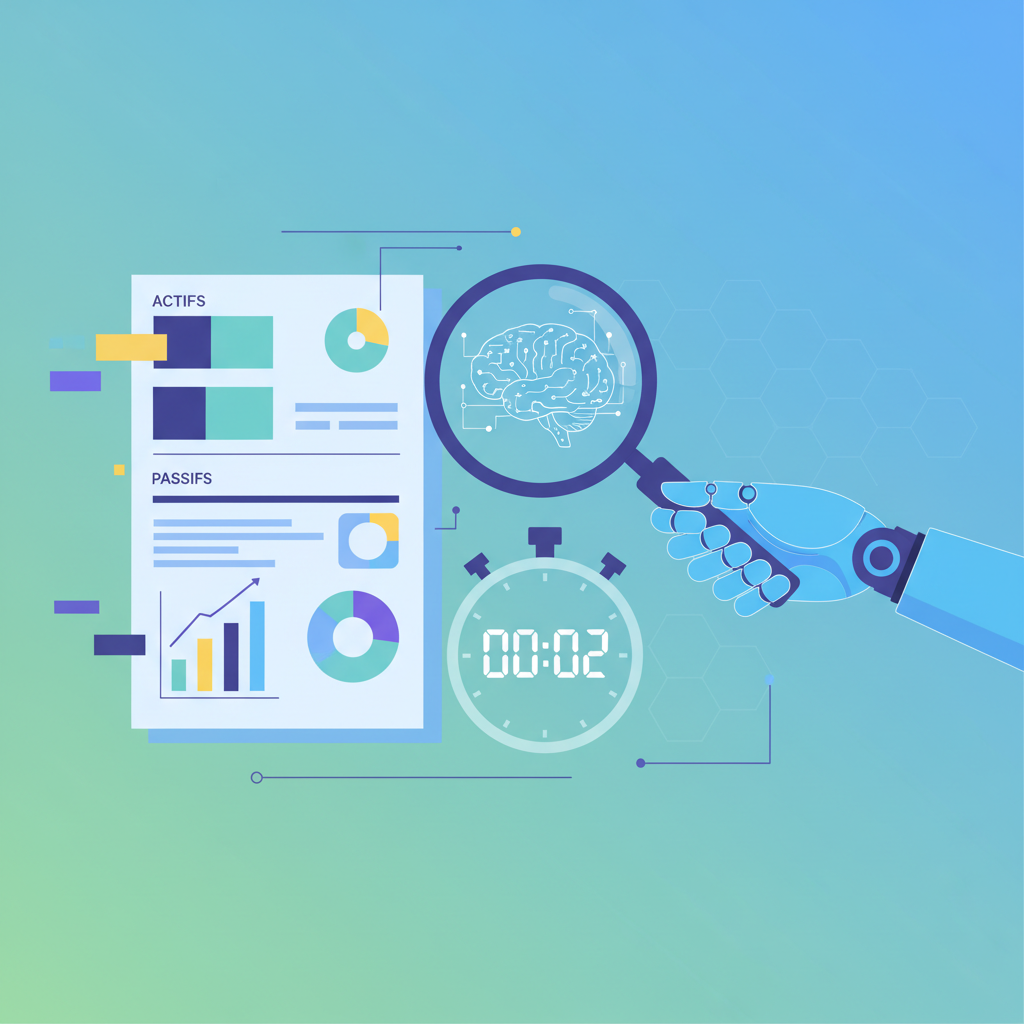
Due diligence is a critical phase where AI demonstrates its full power. Instead of weeks of manual work on financial and legal documents, AI can scan, analyze, and synthesize volumes of data in record time. It can uncover hidden risks or untapped opportunities that would have gone unnoticed.
- Contractual Analysis: AI tools can review and identify important clauses, hidden risks in legal contracts.
- Refined Financial Forecasts: AI models can generate more accurate financial projections by integrating a wider range of economic and sectoral variables.
- Management Team Assessment: By analyzing public data (social networks, press articles), AI can help assess the stability and skills of management teams. This increased efficiency in due diligence reduces costs, accelerates the process, and, most importantly, minimizes the risk of errors, directly contributing to better Private Equity AI returns.
3. Portfolio Management and Performance Maximization
Once the investment is made, AI continues to play an essential role in active portfolio management. It enables fund managers to monitor the health of their holdings in real time, detect emerging challenges, and identify growth levers.
AI-Driven Value-Added Strategies
AI can suggest strategic interventions, such as optimizing supply chains, improving operational efficiency, or developing new markets. For funds specializing in LBO and AI, optimizing cost structures or identifying post-acquisition synergies is greatly facilitated by AI tools.
- Predictive Dashboards: Visualize key AI venture capital performance indicators in real time and anticipate deviations.
- Operations Optimization: Recommend improvements to increase productivity and reduce costs.
- Advanced Customer Segmentation: Identify new market opportunities or retention strategies for portfolio companies.
4. Optimized Exit Strategies: The Key to High Returns
For Private Equity, maximizing ultimate returns depends on a well-executed exit strategy. AI offers valuable tools for determining the optimal timing and the best divestment method. Whether it's an initial public offering (IPO), a sale to a strategic player, or a sale to another fund, AI's predictive analysis can anticipate favorable market conditions.
Anticipating the Capital Exit Market
AI can model different market scenarios based on economic, sectoral, and geopolitical factors, allowing PE funds to sell at peak valuation. It can also identify the most relevant potential buyers and assess their willingness to pay, thus offering a significant advantage during negotiations. This ability to orchestrate a capital exit at the best time is a cornerstone of AI venture capital performance.
5. Real Estate Private Equity and AI: A Promising Duo
Real estate, an asset often considered traditional, is also being revolutionized by AI. AI real estate Private Equity uses algorithms to analyze millions of data points (demographic trends, price per square meter, rental yield, urban projects, satellite data) to optimize investment and asset management decisions.
- Site Selection: Identify areas with high potential for appreciation or rental yield.
- Predictive Valuation: Estimate the future value of a property based on multiple parameters.
- Optimized Rental Management: Forecast occupancy rates, optimize rents, and reduce vacancies. AI enables more intelligent capital allocation, reducing the inherent risks of the real estate market and significantly increasing investment returns.
| Criterion | AI Advantage in PE | Impact Level |
|---|---|---|
| Deal Sourcing | Hidden opportunity detection | High |
| Due Diligence | Risk reduction, speed | Very High |
| Portfolio Management | Operational optimization | High |
| Exit Strategies | Maximizing sale price | Very High |
| Cost Reduction | Task automation | Medium |
- Ignoring data quality: AI is only as good as the data it is fed. Poor quality data leads to erroneous analyses and decisions.
- Blindly relying on AI: AI is a tool, not a substitute for human expertise and strategic judgment. Human validation remains essential.
- Underestimating initial investment: Implementing AI solutions requires significant investment in technology, skilled personnel, and training.
- Neglecting ethics and compliance: The use of AI must comply with data protection regulations (GDPR) and ethical principles to avoid costly litigation and a negative impact on reputation.
- Assess specific needs: Identify the areas (sourcing, due diligence, management) where AI will bring the most value to your fund.
- Train your teams: Invest in training your analysts and managers in AI tools and methodologies.
- Collaborate with experts: Consider partnerships with specialized AI startups or consultants for effective integration.
- Start small, then adapt: Launch targeted pilot projects to test AI effectiveness before broader deployment, measuring the impact on Private Equity AI returns.
- PwC Global Private Equity Report | https://www.pwc.com/gx/en/industries/financial-services/private-equity/private-equity-report.html
- Bain & Company Global Private Equity Report | https://www.bain.com/insights/topics/global-private-equity-report/
- Deloitte Private Equity Industry Outlook Survey | https://www2.deloitte.com/us/en/insights/industry/financial-services/private-equity-trends-outlook-survey.html
Will AI replace Private Equity fund managers? No, AI is a powerful tool that augments managers' capabilities, automating repetitive tasks and providing in-depth analyses, but the final decision and strategic judgment remain human. What is the cost of integrating AI into a Private Equity fund? The cost varies considerably depending on the extent of integration, the chosen solutions (in-house development or third-party solutions), and the size of the fund. It represents an investment, but the potential returns are significant. Is AI relevant for all types of Private Equity? Yes, AI can add value across all segments of Private Equity, from private debt to venture capital, including AI real estate Private Equity and LBOs, by adapting algorithms and data used to each specificity.