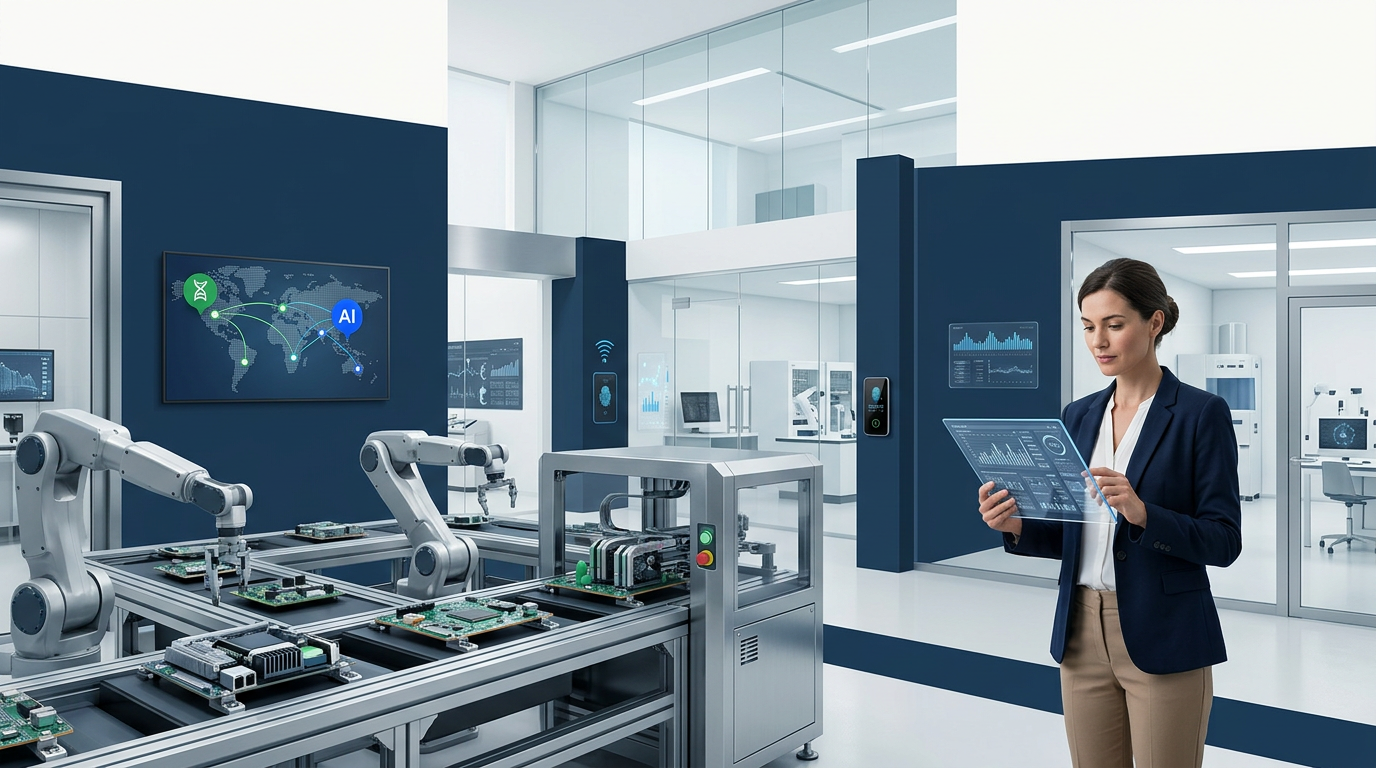
The global economic landscape is constantly changing, and industrial reshoring 2026 is emerging as a major strategy to strengthen national sovereignty and competitiveness. For investors, this movement offers unique prospects for growth and portfolio diversification, particularly in France, where reindustrialization initiatives are multiplying. We will detail the challenges and opportunities of investing in this burgeoning sector.
Industrial reshoring in 2026 represents a strategic investment opportunity, driven by economic sovereignty and public aid. It is crucial to target key sectors such as biotech and AI, understand financing mechanisms, and anticipate challenges to maximize return on investment.
Investing in Industrial Reshoring in 2026: Challenges and Opportunities
1. Industrial Reshoring: A Strategic Imperative for 2026
Industrial reshoring is no longer a mere concept, but an economic and political reality. In 2026, this trend is amplified by geopolitical factors, supply chain disruptions, and an increased awareness of the need to strengthen economic sovereignty. France, in particular, has implemented ambitious policies to invest in French industry 2026, aiming to bring strategic production activities back to its territory. The objective is twofold: secure access to essential goods and create high-value-added jobs. According to a recent report, reshoring could generate more than 100,000 net jobs by 2030 in France. This dynamic creates fertile ground for investments, particularly in innovative sectors with high growth potential.
2. Key Sectors Driving this New Industrial Revolution
For astute investors, identifying key sectors is paramount. Industrial reshoring in 2026 focuses on strategic areas that require cutting-edge technologies and a skilled workforce:
- Biotech and Healthcare: The health crisis demonstrated the imperative need to control the production of medicines and medical equipment. French biotech companies benefit from a robust research and development ecosystem.
- Artificial Intelligence (AI) and Robotics: These technologies are at the heart of automation and optimization of production processes. AI enables a more efficient and connected factory, reducing costs and increasing competitiveness.
- Renewable Energies and Storage: The energy transition is a pillar of reindustrialization, with massive investments in the production of components for wind, solar, and batteries.
- Semiconductors: The global shortage highlighted European dependence. Local initiatives aim to rebuild production capacity on the continent. These sectors offer prospects for significant returns and are part of a long-term vision of sustainable and technological development. They are often targeted by reindustrialization aid programs in France 2026.
3. Financing and Reindustrialization Aid in France 2026
The French government and the European Union have put in place substantial support mechanisms to stimulate reindustrialization. In 2026, this aid serves as a powerful lever for investors:
- The France Relance Plan: 100 billion euros, a significant portion of which is dedicated to industry, for modernization, decarbonization, and reshoring.
- The "Territoires d'Industrie" Fund: Supports industrial projects in identified employment areas.
- Research Tax Credit (CIR) and Innovation Tax Credit (CII): Tax incentives for companies investing in R&D and innovation.
- Future Investment Program (PIA) Financing: Support for future-oriented sectors and DeepTech. Moreover, the interest of sovereign investment funds in reindustrialization is growing, bringing significant capital for large-scale projects. Alpha Invest & Securities, with its expertise in private equity and alternative investments, helps its clients navigate this complex landscape and identify the best opportunities. Discover our alternative investment offers for more information.
4. The Connected Factory: A Pillar of Industrial Investment 2026
Investing in industrial reshoring 2026 implies a modern vision of production. The concept of the connected factory or "Industry 4.0" is central. It involves integrating digital technologies throughout the entire production process: Internet of Things (IoT), Big Data, Cloud Computing, cybersecurity, and advanced automation. Connected factory financing 2026 is therefore a strategic focus. This not only improves operational efficiency and product traceability but also reduces environmental footprint and increases flexibility in the face of market fluctuations. For investors, this means more resilient, innovative, and ultimately more profitable companies.
5. Investment Strategies and Expected Returns
To maximize returns related to industrial reshoring, a strategic approach is essential. It is not just about injecting capital, but about becoming a strategic partner.
- Identification of national champions: Identify innovative SMEs and mid-caps with strong growth potential and reshoring capabilities.
- Long-term investment: Reindustrialization is a process that requires patience and vision. Returns on investment can be significant in the medium and long term.
- Diversification: Do not limit yourself to a single sector. A balanced investment portfolio 2026, integrating various reshored industries, reduces risks and optimizes opportunities.
- Sectoral expertise: Surrounding yourself with experts who master the specificities of AI, biotech, and other high-potential sectors is crucial. Our Expert Investment Team has the necessary skills to guide you. Expected returns can rival, or even exceed, those of traditional investments, thanks to public subsidies, reduced logistics costs, and the valorization of local know-how.
6. Challenges and Prospects of Reshoring
Despite the opportunities, industrial reshoring in 2026 presents challenges:
- Labor costs: The cost of labor in France remains a factor to consider, although automation and robotization can mitigate it.
- International competition: France is not the only country seeking to reshore; competition to attract investments is strong.
- Training and skills: The need to train a skilled workforce for connected factories is imperative. However, the prospects remain very positive. Strong political support, technological innovation, and growing demand for high-quality "Made in France" products are major assets. Alpha Invest & Securities is at your disposal to analyze these opportunities and build robust investment strategies. Contact Alpha Invest & Securities for a personalized appointment.
| Investment Criterion | Key Advantage | Potential Level (1-5) |
|---|---|---|
| Political Stability | Strong governmental support | 4 |
| Technological Innovation | AI, Biotech, Robotics | 5 |
| Domestic Market | Strong demand for "Made in France" | 4 |
| Public Aid | Subsidies and Incentives | 4 |
| Portfolio Diversification | Reduction of global risks | 3 |
- Ignoring public aid: Failing to inquire about available subsidies and tax incentives can lead to missed crucial funding opportunities and reduce project profitability.
- Underestimating logistical complexity: Reshoring is not just a transfer; it requires re-engineering processes and local supply chains.
- Neglecting skills training: A high-tech factory requires specific talents. Failure to anticipate training needs can hinder productivity and innovation.
- Evaluate priority sectors: Identify industries with high reshoring potential aligned with your investment objectives (Biotech, AI, Energy).
- Analyze aid mechanisms: Learn about governmental aid, European funds, and local tax incentives to optimize your financing.
- Prioritize technology investment: Target companies integrating connected factory concepts and Industry 4.0 for increased competitiveness.
- Consult an alternative investment expert: Work with specialists like Alpha Invest & Securities for a tailor-made strategy and access to exclusive opportunities.
- France Relance | https://www.economie.gouv.fr/plan-de-relance
- Bpifrance | https://www.bpifrance.fr/
- Directorate General for Enterprise (DGE) | https://www.entreprises.gouv.fr/fr
What are the main risks associated with investing in industrial reshoring? The main risks include potentially higher production costs, international competition, and the need to develop new local skills. How do government aids impact the profitability of reshoring? Government aids reduce initial investment and operating costs, thereby improving profitability and making reshoring projects more attractive to investors. Which sectors are most promising for reshoring in 2026? The most promising sectors are healthcare, biotechnologies, artificial intelligence, renewable energies, and semiconductors, due to their strategic nature and the innovation they represent.