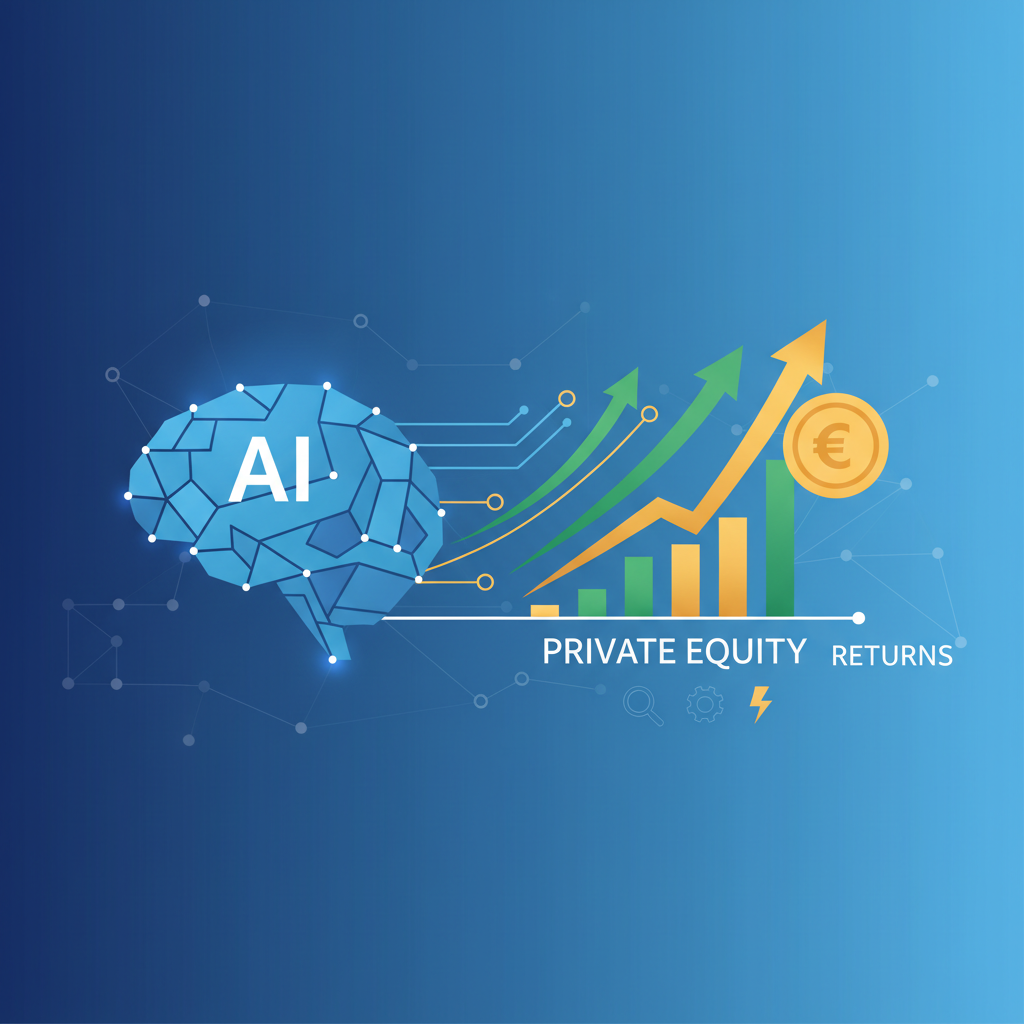
Private Equity (PE) is a driver of growth and wealth for many investors. Today, Artificial Intelligence (AI) is on the verge of redefining the paradigms of this sector. How does AI, from due diligence to capital exit, transform Private Equity and what Private Equity AI returns can you legitimately expect from it?
AI optimizes Private Equity by automating data analysis, improving due diligence, portfolio management, and exit strategies, leading to a significant improvement in venture capital AI performance and returns. It offers increased investment opportunities and better risk management.
1. AI, a Catalyst for Performance in Private Equity
The integration of Artificial Intelligence into Private Equity is no longer a mere prospective theory; it has become a tangible reality, transforming every link in the value chain. AI-based tools allow for unprecedented data analysis, well beyond human capabilities.
From Opportunity Detection to LBO Optimization
AI particularly excels in early detection of investment opportunities. By relying on machine learning algorithms, it can analyze millions of data points – financial reports, market trends, patents, sectoral news – to identify undervalued companies or those with high growth potential that human analysts might miss. For LBO and AI operations, artificial intelligence refines target valuation, predicts the resilience of post-acquisition business models, and simulates complex deleveraging scenarios, thereby optimizing the financial structure and timing of operations.
2. Optimizing Due Diligence and Portfolio Management
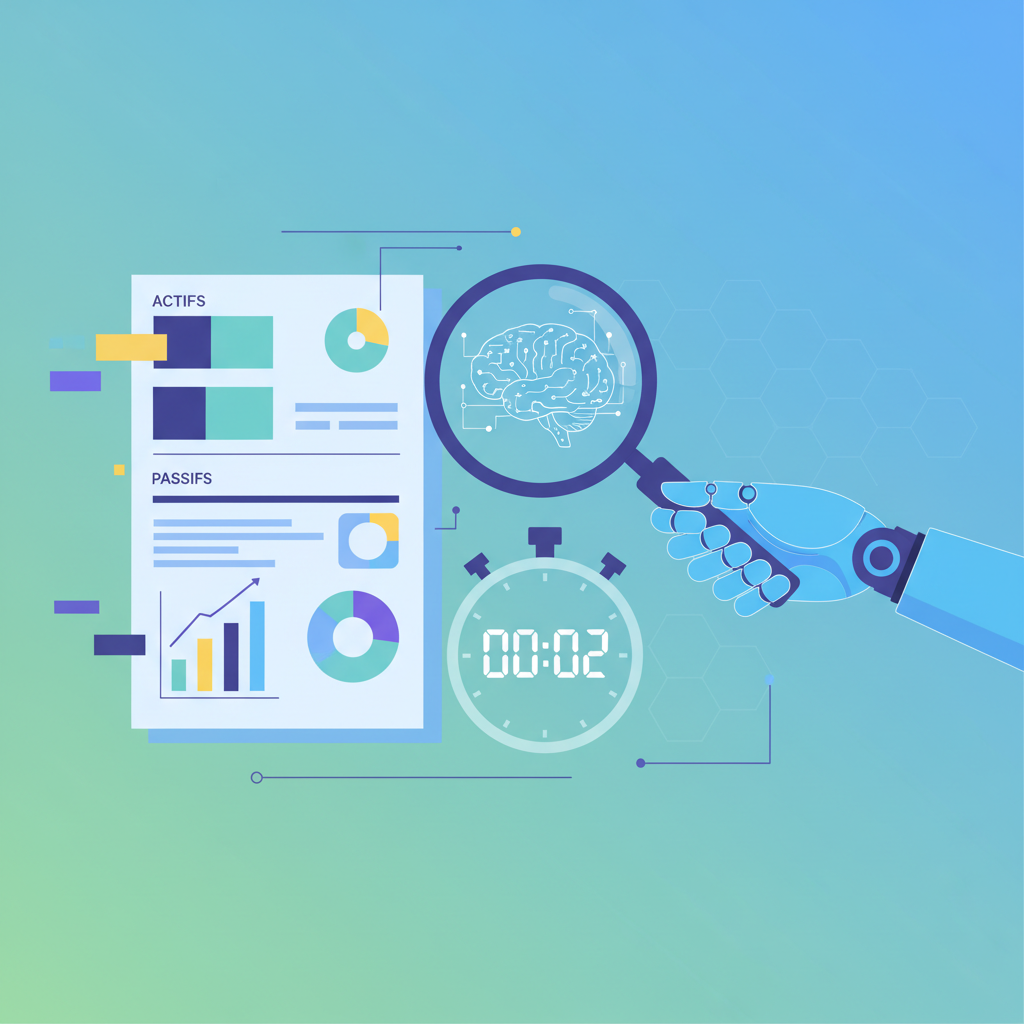
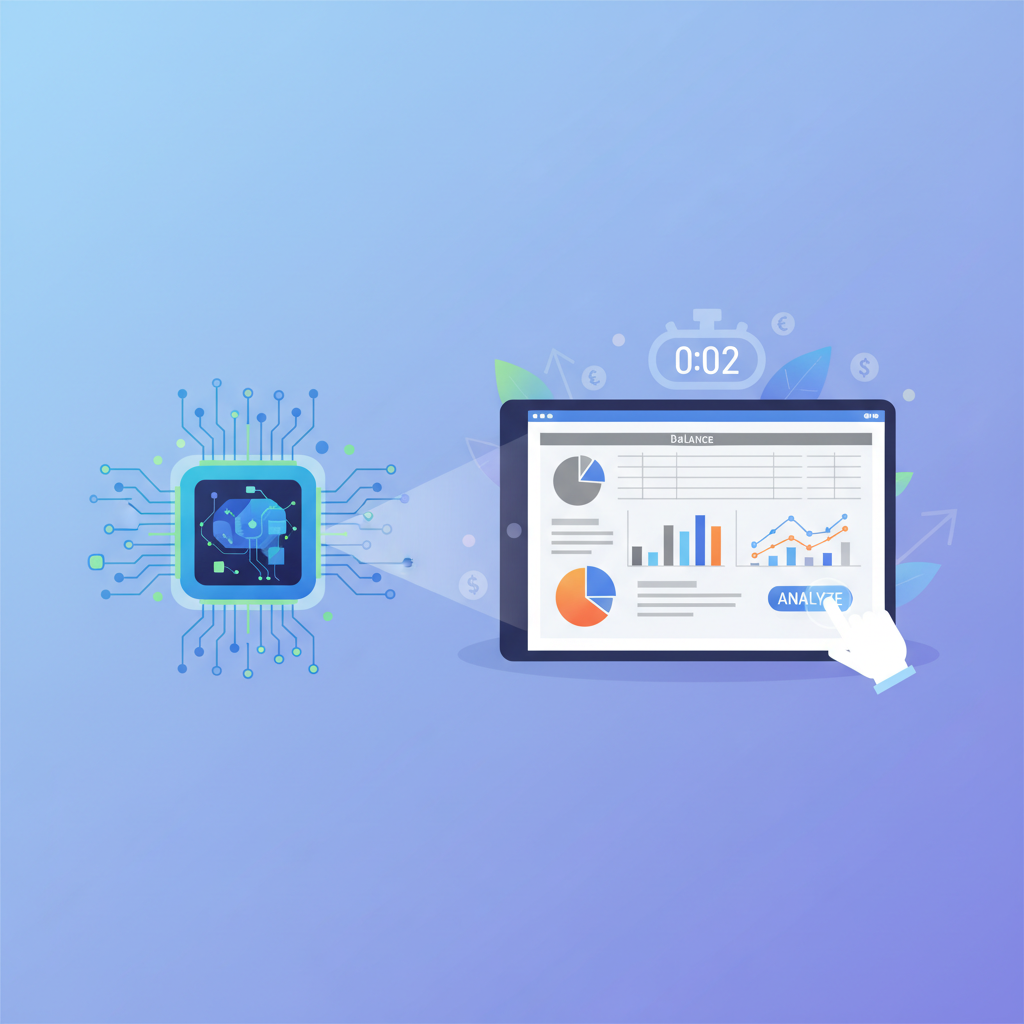
The due diligence phase is crucial and often time-consuming. AI revolutionizes this stage by accelerating the collection and analysis of critical information.
Predictive Analytics and Improved Decisions
AI systems can:
- Structure unstructured data from various sources (contracts, emails, social networks).
- Identify latent operational or financial risks that escape conventional analysis.
- Predict the future performance of target companies with increased accuracy, thanks to predictive models based on historical data and macroeconomic trends. Once the investment is made, AI continues to play a leading role in portfolio management. It monitors key performance indicators (KPIs) in real-time, alerts in case of deviation from forecasts, and can even suggest corrective actions to optimize the value of holdings.
3. Maximizing Returns: AI-Boosted Exit Strategy
Capital exit is the ultimate stage where returns for Private Equity investors materialize. AI provides valuable assistance in maximizing the sale value.
Market Forecasting and Optimal Timing
AI can analyze market conditions, valuation multiples, and sectoral trends to determine the optimal timing for an exit. Whether through a sale to an industrial buyer, an initial public offering (IPO), or a divestment to another fund. By forecasting favorable market windows, PE funds can achieve divestments at maximum valuations. Furthermore, AI can more accurately identify potential acquirers and their preferences, thus facilitating negotiations and transaction structuring.
4. Private Equity, Real Estate, and AI: A Winning Trio?
The real estate sector, a significant component of Private Equity in some funds, also benefits from AI's contribution. From asset valuation to property management, the applications are numerous.
Valuation and Management of Real Estate Assets
Real Estate Private Equity AI uses algorithms to:
- Evaluate the accuracy of market prices.
- Anticipate changes in rents and property values.
- Optimize the asset portfolio by suggesting acquisitions or divestitures based on return and risk criteria.
- Improve rental management and predictive maintenance, reducing operational costs and increasing profitability.
5. Expected Returns and Challenges of AI in Private Equity
So, what Private Equity AI returns can one realistically expect? Initial studies and feedback suggest a potential increase in returns of 10% to 20% due to improved decision-making, greater efficiency, and risk reduction.
Return Outlook
The impact is multidimensional:
- Improved identification of "gems": access to less explored sectors or companies.
- Reduction of unforeseen events: better analysis of legal, financial, and operational risks.
- Optimization of valuations: better prices at acquisition and divestiture.
- Operational efficiency: reduction of costs and improvement of portfolio companies' margins. However, challenges remain: data quality, the cost of AI infrastructure, the need for specific skills, and the ethics associated with the use of algorithms.
| Criterion | Advantage | Level |
|---|---|---|
| Due Diligence Accuracy | Latent Risk Identification | High |
| Portfolio Management | Proactivity, Value Optimization | Strong |
| Exit Strategy | Better Timing, Max Valuation | Very High |
| Opportunity Detection | Access to Untapped Markets | High |
- Launching without a clear AI strategy, considering AI as a mere tool and not a strategic lever.
- Underestimating the need for quality data and the complexity of integrating it into AI systems.
- Neglecting team training: AI does not replace humans but augments their capabilities; hybrid expertise is crucial.
- Evaluate the current state of your data infrastructure and identify gaps.
- Start with targeted pilot projects to test AI in specific areas (e.g., due diligence).
- Invest in continuous training for your teams in AI-related skills.
- Collaborate with AI experts or specialized companies for effective and measurable deployment.
- PwC - Private equity and AI: Ready for impact? | https://www.pwc.com/gx/en/industries/private-equity/private-equity-and-artificial-intelligence.html
- Bain & Company - AI in Private Equity | https://www.bain.com/capabilities/private-equity/trending-topics-private-equity/ai-in-private-equity/
- Deloitte - The future of private equity: How AI is transforming the industry | https://www2.deloitte.com/us/en/pages/financial-services/articles/private-equity-ai-outlook.html
Will AI replace Private Equity managers? No, AI is a powerful tool that will augment managers' capabilities, allowing them to focus on higher value-added tasks, such as negotiation and strategy, while leaving complex data analysis to algorithms. Is Private Equity investment enhanced by AI riskier? On the contrary, AI can reduce certain risks by improving the accuracy of analyses, fraud detection, and market trend forecasting, leading to more informed investment decisions and potentially better Private Equity AI returns. How can an investor ensure that a fund effectively uses AI? Investors should inquire with funds about their AI integration strategies, the specific technologies used, their teams' AI expertise, and concrete cases where AI has contributed to the fund's performance.