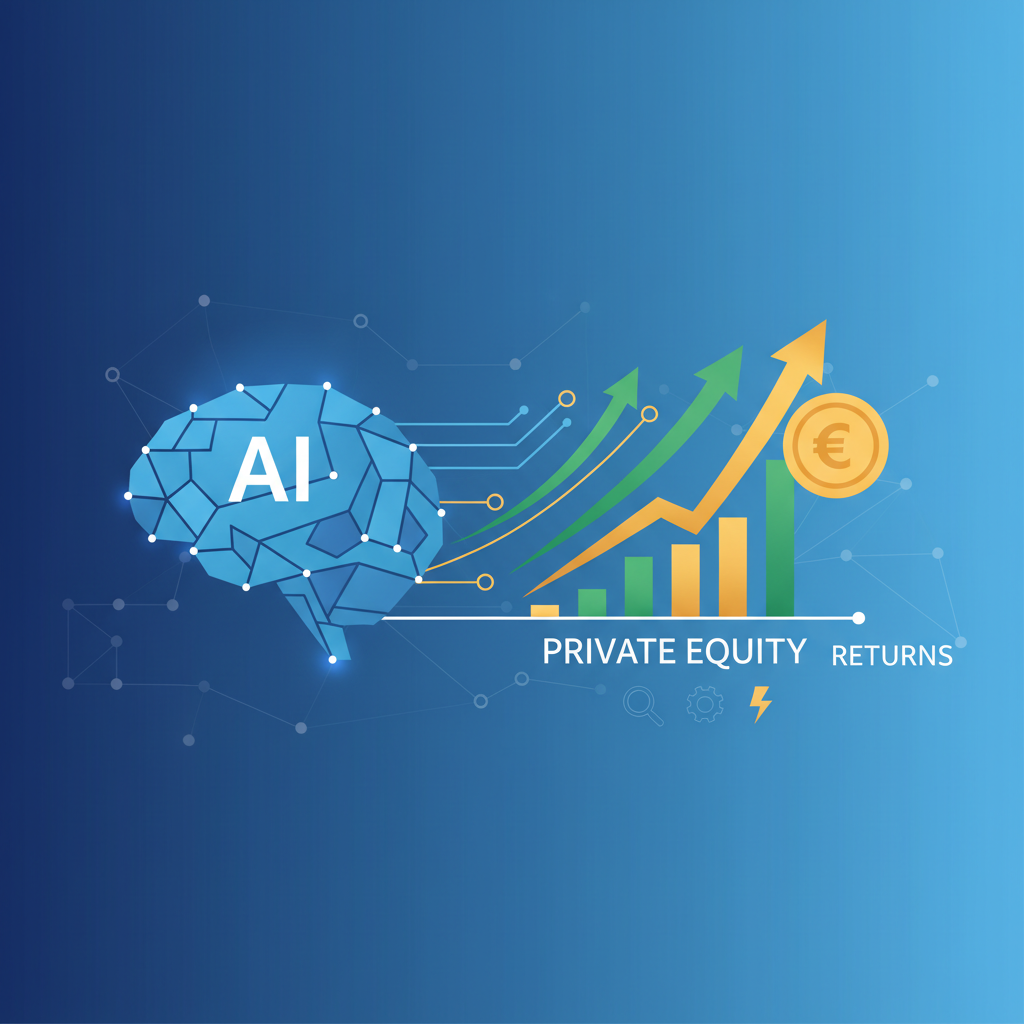
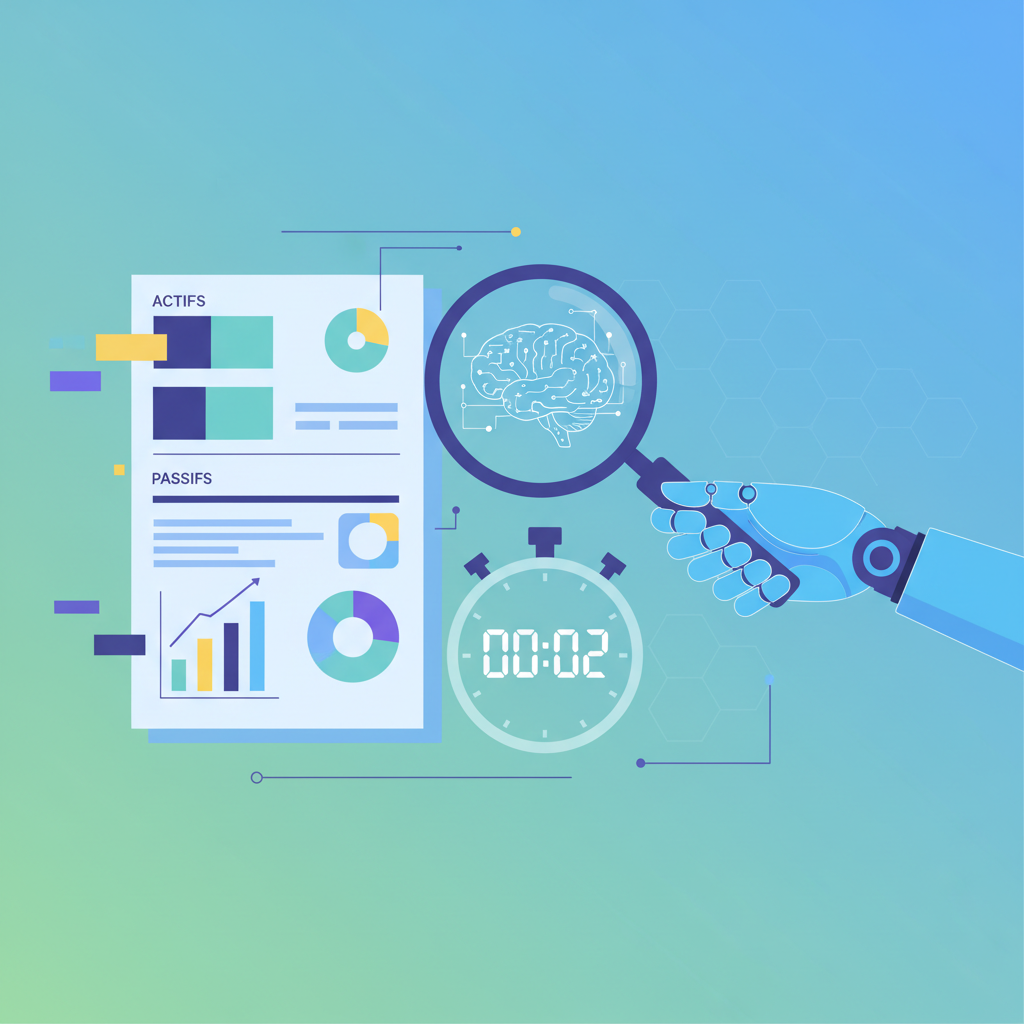
In the modern financial landscape, the accuracy of financial forecasts is the cornerstone of any successful investment strategy. While traditional methods rely on human experience, the advent of Artificial Intelligence (AI) raises a crucial question for investors: Is AI now more reliable than humans in anticipating the financial future?
AI offers a clear advantage in speed and data processing for AI financial forecasts, often surpassing humans in accuracy for specific and repetitive tasks. Its increased reliability stems from its ability to identify complex correlations and eliminate emotional biases, making AI financial forecasting models an indispensable tool for discerning investors.
AI Financial Forecasts: Does Artificial Intelligence Outperform the Human Expert?
1. The Era of AI Financial Forecasting: An Analytical Revolution
The integration of artificial intelligence into the finance sector marks a major turning point. AI financial forecasting models leverage the colossal volume of available financial data – stock market transactions, economic reports, news, macroeconomic data – to identify complex patterns and trends that the human eye might miss. These systems do not just consolidate information. They use advanced corporate finance machine learning algorithms to:
- Detect non-obvious correlations.
- Anticipate market movements with unparalleled speed.
- Continuously adapt their models as new data arrives. This learning and adaptation capability makes AI financial forecasts dynamic and potentially more relevant in the face of rapidly evolving markets.
2. Human vs. AI: Comparative Strengths and Weaknesses
The real question is not who is "better" in absolute terms, but rather to understand the distinct advantages of each approach and how they can complement each other.
2.1 The Undeniable Strengths of AI
AI systems excel where humans are limited by their cognitive and emotional capacities:
- Speed and Data Volume: AI can analyze terabytes of data in seconds, a task impossible for a human analyst.
- Objectivity: Devoid of emotions, algorithms are not subject to cognitive biases, excessive optimism, or panic. They follow data logic.
- Complexity: AI can detect non-linear patterns and complex interactions between hundreds of variables, which is difficult for a human brain.
- Continuous Learning: AI financial forecasting software improves with every new piece of data, constantly refining its models.
2.2 The Irreplaceable Value of the Human Expert
Humans, with their intuition and ability to understand context, retain crucial assets:
- Qualitative Judgment: Humans can integrate non-quantifiable factors such as geopolitics, social sentiment, or subtle regulatory changes that sometimes elude AI.
- Contextual Understanding: A human analyst can interpret unforeseen events (black swans) or paradigm shifts that have no precedent in AI's historical data.
- Strategy and Innovation: The formulation of innovative investment strategies, client relationship management, or ethical decision-making remain the domain of humans.
3. Reliability of AI Financial Predictions: What are the Limits?
The reliability of AI financial predictions heavily depends on several factors. While powerful, it is not infallible.
- Data Quality: "Garbage in, garbage out." If the input data is biased, incomplete, or erroneous, AI's forecasts will be too.
- Unforeseen Events: AI relies on historical data. An unprecedented event (global pandemic, major war) can render its models obsolete.
- Model Opacity (Black Box): Some complex AI models can be difficult to interpret, making it hard to understand the reasons behind a prediction. This can be a hindrance for investors seeking a logical explanation.
- Risk Management: AI can quantify risks, but the final decision to accept or mitigate these risks always falls to human assessment.
4. Synergy: The Hybrid Approach, Future of Financial Forecasting
Combining the best of AI and human intelligence is the most promising path to optimizing financial forecasts. The goal is not to replace, but to augment human capabilities. In this hybrid model:
- AI manages data volume, pattern identification, and rapid scenario generation.
- Human experts bring their discernment, experience, ability to interpret complex situations, and validate AI results.
- AI financial forecasting software becomes a decision-support tool, offering insights that analysts can then contextualize and deepen. This collaboration achieves forecasting accuracy and robustness far superior to what either entity could achieve alone. This is key to navigating the uncertainty of modern markets.
5. Choosing the Right AI Financial Forecasting Software for Investors
For investors, adopting AI financial forecasting software is a strategic move. It is crucial to choose tools that offer:
- Transparency: "Explainable" models (XAI) are preferable for understanding the basis of forecasts.
- Customization: The ability to adapt models to specific sectors or risk profiles.
- Integration: Compatibility with existing systems and relevant data sources.
- Support and Evolution: A provider that regularly updates its algorithms and offers technical support. Investing in a suitable AI solution can transform how you manage your portfolios and anticipate markets.
| Criterion | AI (Advantage) | Human (Advantage) | Integration Level (Synergy) |
|---|---|---|---|
| Data Processing | Speed, volume, complexity | Qualitative understanding | High |
| Emotional Bias | Absent | Present (potential) | Low (AI corrects) |
| Innovation | Detection of non-trivial patterns | Original strategic thinking | High |
| Contextualization | Low (data) | High (experience, intuition) | High |
| Robustness | Continuous learning | Adaptability to unforeseen events | High |
- Ignore AI limits: Believing that AI is infallible and can predict everything is a major mistake.
- Neglect human expertise: Relegating human experts to a secondary role, underestimating their ability to interpret nuances and non-quantifiable events.
- Use poor quality data: AI forecasts will never be better than the data they rely on, and erroneous data will lead to erroneous decisions.
- Assess your needs: Define the types of forecasts (macro, micro, sectoral) and the desired frequency for your investment strategy.
- Research AI solutions: Study the available AI financial forecasting software, favoring those that emphasize transparency and customization.
- Implement a hybrid approach: Integrate AI as a decision-support tool, while maintaining a central role for human analysis and validation.
- Train and adapt: Understand the basic principles of AI models to better interpret their results and adapt your strategy to the evolving capabilities of AI.
PRIMARY: Discover our AI solutions for investors SECONDARY: Download our guide on AI-augmented finance
- PwC Global AI Study | https://www.pwc.com/gx/en/issues/ai-robotics/pwc-global-ai-study-raises-concerns-over-ethics-of-ai.html
- Deloitte Insights | https://www2.deloitte.com/us/en/insights/focus/cognitive-technologies/ai-in-finance-and-banking.html
- Forbes | https://www.forbes.com/sites/forbestechcouncil/2023/11/02/the-future-is-now-ai-and-the-financial-market/?sh=227eb0c8227b
FAQ Q: Can AI predict stock market crashes? A: AI can identify warning signs and patterns often associated with crashes, but it cannot "predict" a unique and unforeseen event with certainty, as this would involve non-existent data. Q: Will AI replace financial analysts? A: No, AI will not replace analysts, but it will enhance their capabilities. It will automate repetitive tasks and the analysis of massive data, allowing analysts to focus on interpretation, strategy, and qualitative judgment. Q: What are the main risks associated with using AI in finance? A: The main risks include reliance on data quality, model opacity (black box), risk management related to unprecedented events (black swans), and ethical issues or algorithmic biases.